The Artist
Timeline
A chronology of the life of Aref El Rayess, grouped into periods, with the history around it.
Filters
Period 01 · 1928–1948
Aley: early years
October 24, 1928 · Life
Born in Aley
Aref El Rayess was born in Aley (Mount Lebanon) into a Druze family, to Najib El Rayess and Latifeh Abi Rafeh. He had three siblings, two younger brothers, Farid and Riyad, and a sister, Salma.
1930s · Life
His father founds EMCO
His father, an entrepreneur, founded EMCO in the 1930s, a public works company active in Lebanon and Palestine, then in Africa (until 1961) and in Saudi Arabia with Farid and Riad who supported Rayess and his work by arranging exhibitions, commissions and collaborations with their projects.
1939 · Study, teaching and encounters
Begins painting with his mother
He started to paint together with his mother, Latifeh Abi Rafeh.
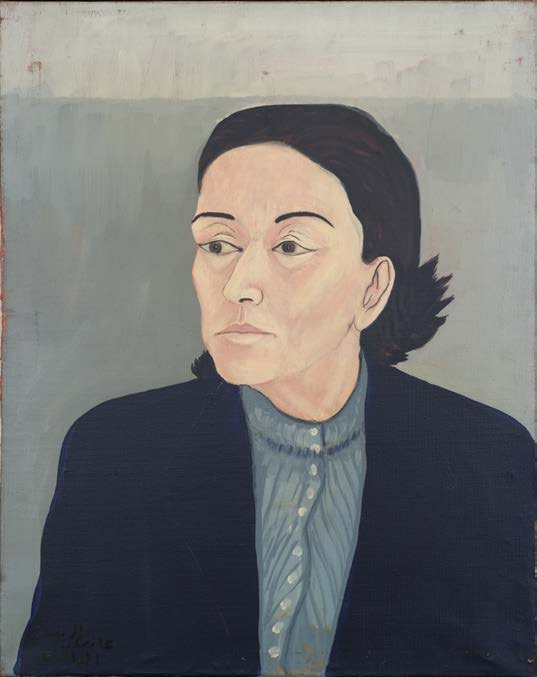
Alwalida (Artist’s Mother) · 1953 · Oil on canvas · 65 × 52 cm
Courtesy the estate of the artist and Sfeir-Semler Gallery, Beirut/Hamburg
November 22, 1943
Lebanese independence
Declaration of independence of the Lebanese Republic.
1944 · Study, teaching and encounters
College of Saint Joseph, Antoura
He started at the French-speaking Lazarist College of Saint Joseph in Antoura, where many of the Lebanese elite went, including Kamal Jumblatt (1917-1977), the founder and historical leader of the Lebanese PSP (Progressive Socialist Party), set up in 1949. Rayess became a close friend of Jumblatt and his wife May.
1945 · Study, teaching and encounters
Discovers the writing of Mikhail Naimy
He explored the work of Mikhail Naimy (1889-1988), a Lebanese writer and poet close to Gibran Khalil Gibran (1883-1931), an active member of the Arab literary diaspora in the United States from 1911-1931, and the author of various different philosophical and spiritual texts (including Le Livre de Mirdad [The Book of Mirdad], published in 1948), putting forward a synthesis of the spiritual East and the materialistic West and a monistic vision of man and nature.
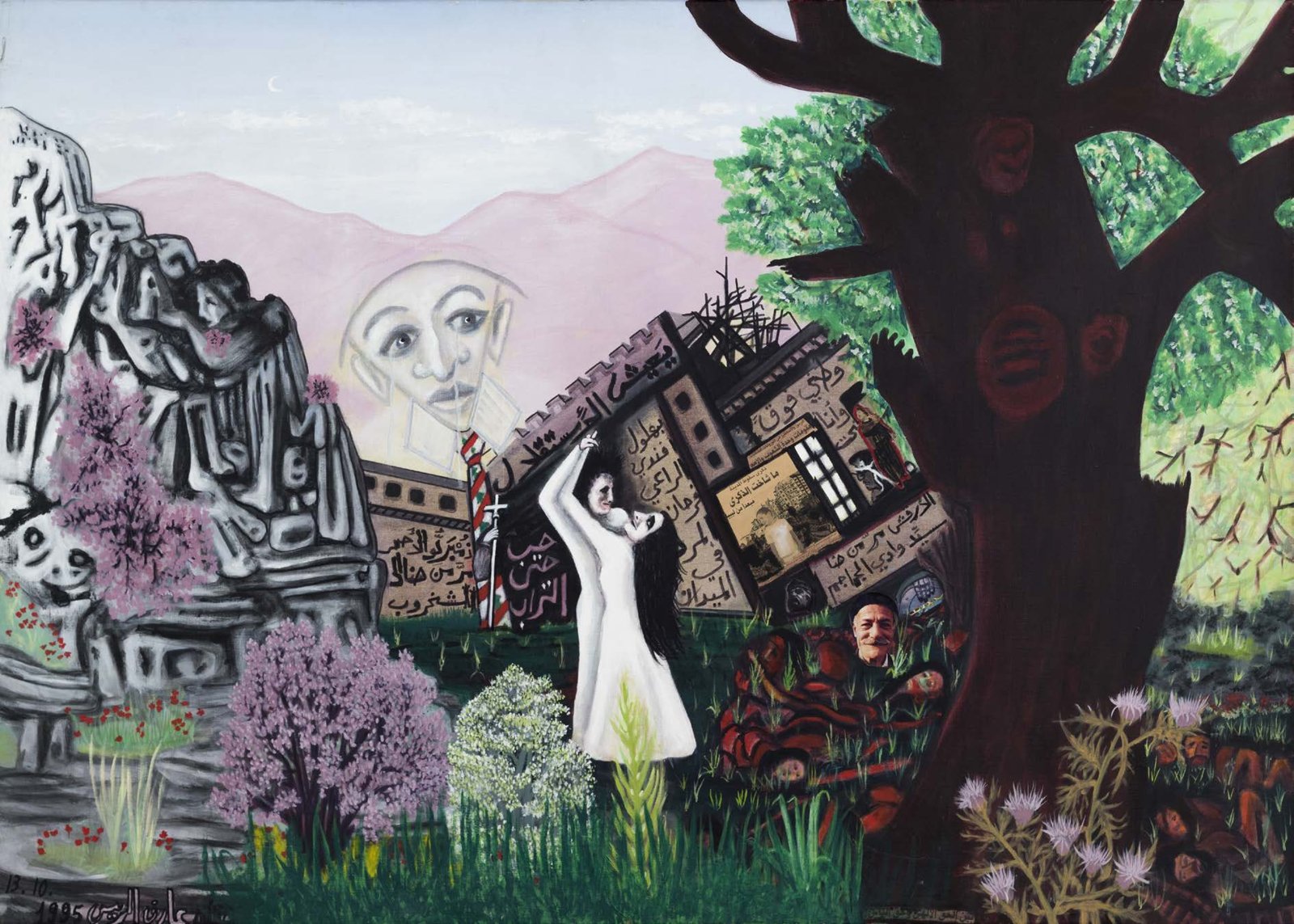
Awdat Mirdad (The Return of Mirdad with Peace) · 1995
Courtesy the estate of the artist and Sfeir-Semler Gallery, Beirut/Hamburg · Photo: Walid Rashid
July 1947 · Study, teaching and encounters
A drawing for Mikhail Naimy
In July Rayess sent Naimy a drawing entitled Nisbaẗ ṣilaẗ āl-fikr wāl-rūḥ bayn āš-šarq wāl-ġarb (The Relationship between Thought and Spirit in the East and the West) depicting a man with a halo and his shadow surrounded by angels. Naimy invited him to his hermitage of Baskinta in Mount Lebanon, which he visited regularly.
1948
Kamal Jumblatt’s first journey to India
The first of a long series of trips by Kamal Jumblatt to India, where he regularly stayed at Parvathy Vilas, in the ashram of Atmananda Krishna Menon (1883-1959) in Thiruvananthapuram (Kerala), for spiritual retreats, or had meetings with political Indian leaders. Atmananda Krishna Menon, who appears as Ananda in the poems written by Jumblatt between 1955 and 1975 and published as Ananda-Félicité (Ananda-Felicity) in 1975, was one of the great reformers of Advaita Vedanta religious philosophy in the first half of the 20th century.
May 14, 1948
Declaration of the State of Israel and the Nakba
Declaration of the State of Israel followed by the Nakba (Catastrophe) and the mass exodus of Palestinians.
May 20 – June 12 1948 · Exhibitions
First exhibition, American University of Beirut
First exhibition at the West Hall of the American University of Beirut (AUB), which was hosting a UNESCO conference at the same time. Julian Sorell Huxley (1887-1975), the co-founder of UNESCO and then Director-General, and Peter Bellew (1912-1986), the Director of the Section of Arts and Letters, visited the exhibition and had some of Rayess’s work transferred to the Palais de l’UNESCO for the inter- national exhibition on display during the Third Session of the General Conference in Beirut.
Period 02 · 1948–1956
Senegal and Paris
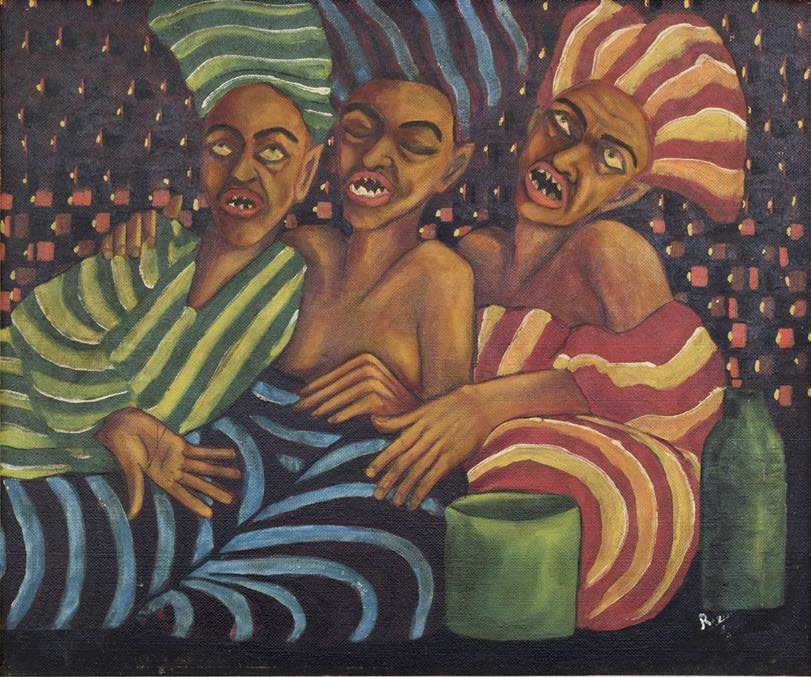
Les priants d’Allah (Allah’s Worshipers) · 1956 · Oil on masonite · 59 × 70 cm
Courtesy the estate of the artist and Sfeir-Semler Gallery, Beirut/Hamburg
December 1948 · Residence and travel
First visit to Senegal
First visit to Senegal, where he joined his father in Dakar, now the owner of a trading post with plantations in Kolda in Casamance. A rich sequence of works on paper (drawings, watercolours and gouaches) and on canvas began, showing african landscapes and sensitive portraits of the people of Casamance, where he frequently visited. His intimate relationship with this country and its inhabitants left a lasting impression on his thinking and his work.
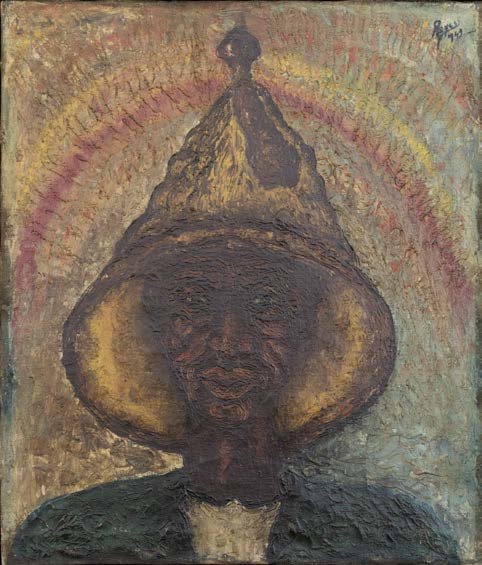
Untitled · 1949 · Oil on canvas · 47.5 × 41 cm
Courtesy the estate of the artist and Sfeir-Semler Gallery, Beirut/Hamburg
May 1950 · Study, teaching and encounters
Studies art in Paris
Moving to Paris to study art. Attended the free academies of Fernand Léger (where he met with his friend Saloua Raouda Choucair), André Lhôte, La Grande Chaumière (workshops of Ossip Zadkine and Henri Goetz), Johnny Friedlaender’s Hermitage workshop (engraving and lithography) and the live model course at the Cours Supérieur de Dessin Appliqué à l’Art et à l’Industrie in Montparnasse. He tried his hand at various different arts and disciplines: ballet, theatre, mime and pantomime with Marcel Marceau, Etienne Ducroux and Jean-Louis Barrault, and even sewing for ladies. He took up painting again and attended the École des Beaux-Arts, the Musée de l’Orangerie, the Louvre Museum where he discovered the Phoenician, Assyrian, Pharaonic, Byzantine and Arab heritages, and the Museum of Modern Art. He worked alongside Lebanese artists living in Paris such as Etel Adnan, Chafic Abboud, Said Akl, Farid Aouad, Michel Basbous, Jean Khalifé and Nicolas Nammar. He also became interested in the intellectual debates of the post-war period.
October 1951 · Writing and publications
Writes the play Le Précédent
He sent the first draft of a four-act play entitled Le Précédent (The Forerunner) from Dakar to friends in Beirut.
1954
End of the Indochina War
End of the Indochinese War (1946-1954).
1954
Algerian War of Independence begins
Start of the War of Independence in Algeria (1954-1962).
1956–1958 · Commissions, public works and stage design
Signes de Cadmus, an Aubusson tapestry for UNESCO
Produced the cartoon for Signes de Cadmus [Signs of Cadmus], an Aubusson tapestry (1.30 x 3.50 metres) completed in November 1958 under the direction of the Canadian weaver Roger Caron in “La Loggia” workshop in Beirut, and commissioned for the office of the Secretary General at the UNESCO headquarters Vittorino Veronese.
6–16 April 1956 · Exhibitions
Exhibition at the Foyer Franco-Libanais, Dakar
Exhibited some fifty paintings and drawings at the Foyer Franco-Libanais in Dakar.
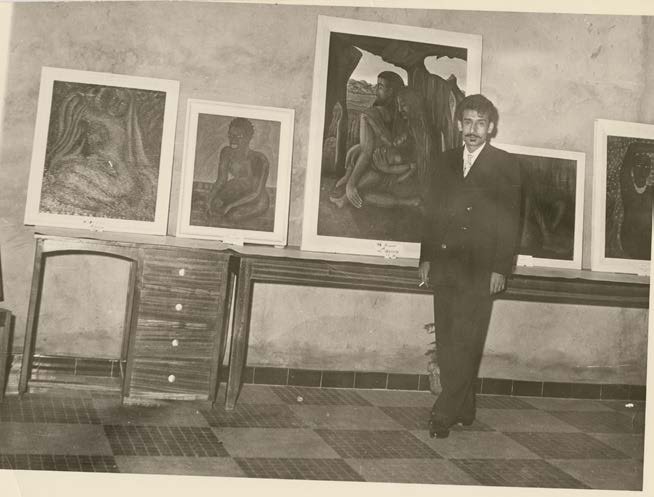
The artist with his works · 1950s
Courtesy Aref El Rayess Foundation
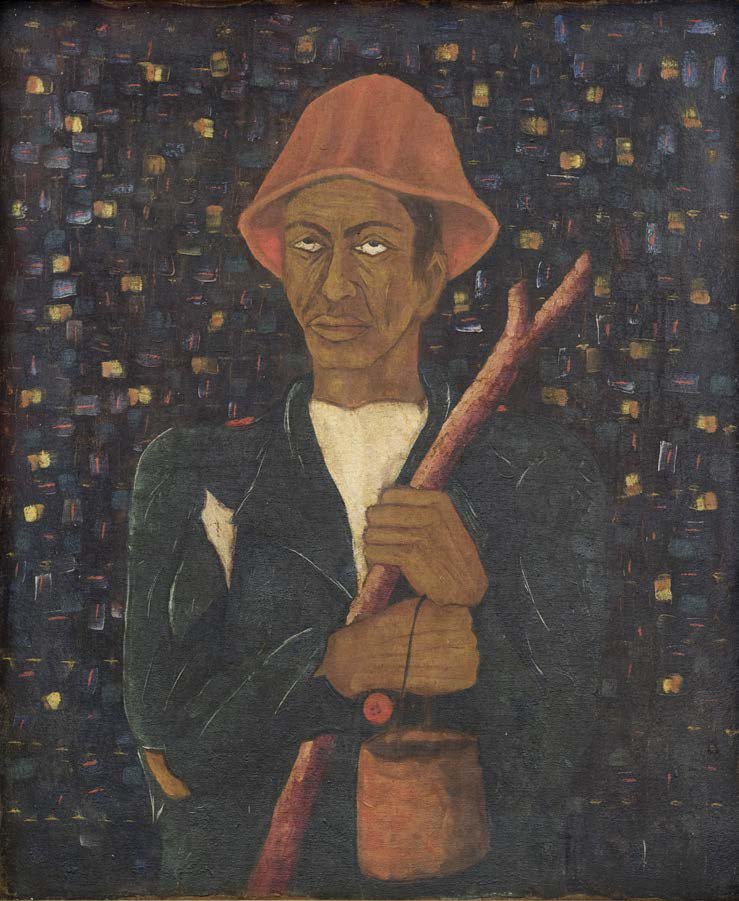
Dans la nuit (In the Night) · c. 1956 · Oil on canvas · 64 × 53 cm
Courtesy the estate of the artist and Sfeir-Semler Gallery, Beirut/Hamburg
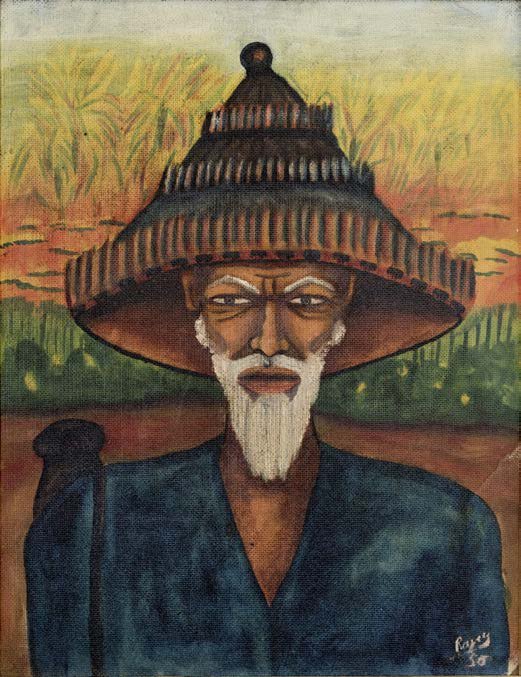
Maradou Silla · 1956 · Oil on masonite · 63 × 49 cm
Courtesy the estate of the artist and Sfeir-Semler Gallery, Beirut/Hamburg
July 26, 1956
Nationalisation of the Suez Canal
Nationalization of the Suez Canal.
Period 03 · 1956–1960
Beirut
November 1956 · Residence and travel
Returns to Lebanon
Returned to Lebanon. Shared his time between painting, acting and working for theatre and television.
1957 – January 1958 · Awards and prizes
6th UNESCO Salon and the National Education Prize
Participated in the 6th UNESCO Salon of Painting and Sculpture in Beirut with 4 African landscapes (Le village de Sarrimussa, Le village de Sarri-Sambaly, Le village Tankanton et La petite Tankanton [The Village of Sarrimussa, The Village of Sarri-Sambaly, The Village Tankanton and The Little Tankanton]), and 4 engravings (Le cheval effrayé, Nu dans le nu, Attente, et Introspection [The Frightened Horse, Nude in the Nude, Waiting, and Introspection]). Won the National Education Prize.
1958 · Commissions, public works and stage design
The Bakaata memorial, Moukhtara
The events led Rayess to Moukhtara - the stronghold of the Jumblatt family - where he designed, in collaboration with Kamal Jumblatt and the artist Wahib Bteddini, the Bakaata memorial in homage to the martyrs who fell in the clashes.
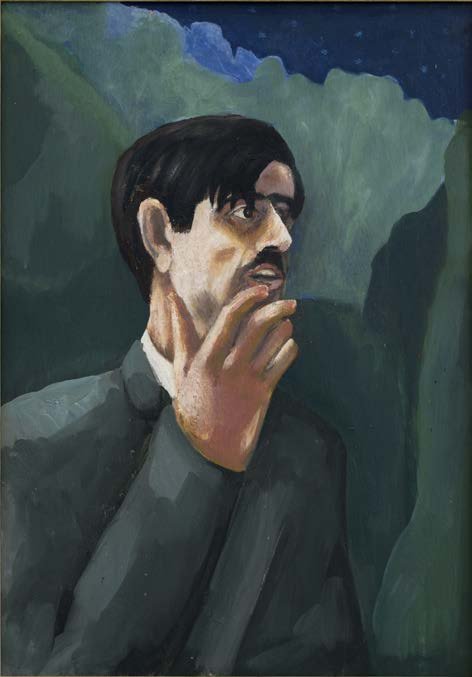
Kamal Beik Jumblatt · c. 1958 · Oil on plywood · 67 × 47 cm
Courtesy the estate of the artist and Sfeir-Semler Gallery, Beirut/Hamburg · Photo: Walid Rashid
February 1, 1958
Founding of the United Arab Republic
Foundation of the United Arab Republic (UAR), a brief political union between Egypt and Syria (1958 - 1961).
May 1958
The 1958 crisis in Lebanon
Following the assassination of the editor of the pro-Syrian newspaper Telegraph, riots erupted throughout Lebanon. The violence pushed President Camille Chamoun to ask for help from outside, from the Arab League as well as the UN, then the United States under the Eisenhower doctrine. On 15 July, for the first time in the Middle East, American troops landed on Khaldé beach, near Beirut.
June 1958
Fighting in the Chouf mountains
Guerrilla warfare erupted in the mountains between Naim Moghabghab’s loyalists and Kamal Jumblatt’s supporters.
c. 1959 · Awards and prizes
Italian government scholarship
Awarded a scholarship by the Italian government to study at the Academy of Fine Arts in Florence for the academic year 1960-1961.
c. 15–30 April 1959 · Exhibitions
African works at the Italian Cultural Centre, Beirut
African artworks (portraits and landscapes) exhibited at the Italian Cultural Centre in Beirut, in the presence of Mikhail Naimy and the critics Georges Cyr and Georges Schéhadé (a Lebanese poet and playwright, 1905-1989).
c. November 18, 1959 · Exhibitions
Le Liban vu par Aref El-Rayess, Alecco Saab Gallery
Exhibited Le Liban vu par Aref El-Rayess [Lebanon Through the Eyes of Aref El-Rayess], a series of Lebanese landscapes (the Chouf region where he stayed during the events), at the Alecco Saab Gallery in Beirut.
1960 · Major works and series
Tribute to the Martyrs of the Algerian Revolution
While taking part in a demonstration organised by the left in Florence, he learned that Italy had voted alongside France on the Algerian issue at the United Nations. He then destroyed all his work produced to celebrate the centenary of the unification of Italy (1861), and painted Salut aux martyrs de la Révolution Algérienne [A Tribute to the Martyrs of the Algerian Revolution], which he offered to the National Museum of Fine Arts in Algiers in 1972.
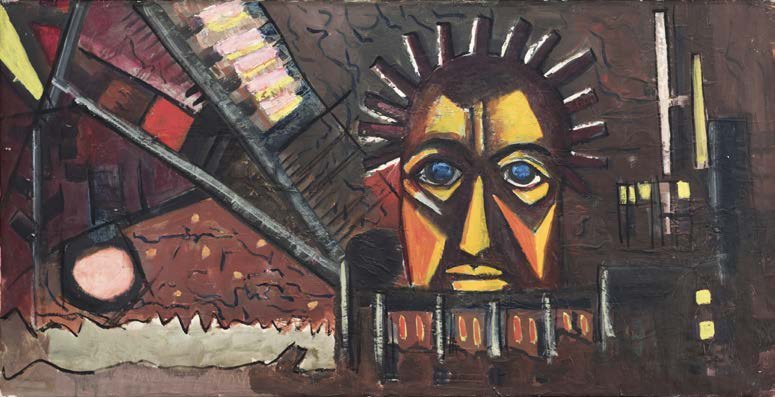
Eveil de l’Afrique—Algérie · 1960 · Tempera and oil on canvas · 51 × 99.5 cm
Courtesy the estate of the artist and Sfeir-Semler Gallery, Beirut/Hamburg · Photo: Walid Rashid
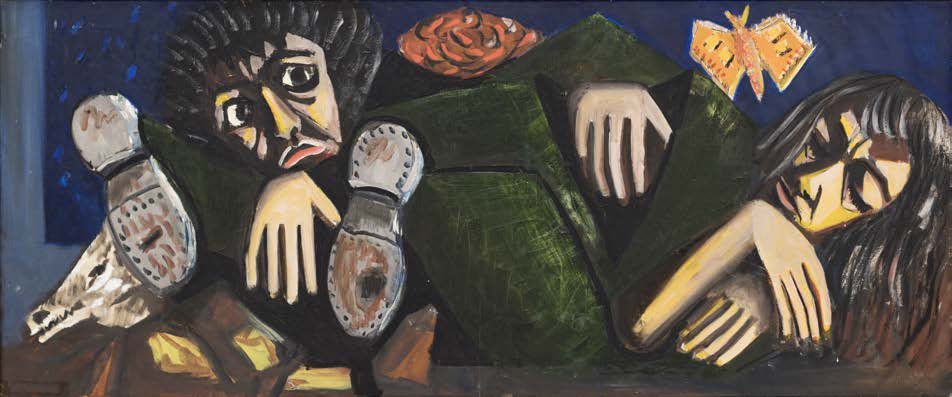
Après la torture · 1960 · Tempera and oil on canvas · 49.5 × 118 cm
Courtesy the estate of the artist and Sfeir-Semler Gallery, Beirut/Hamburg · Photo: Walid Rashid
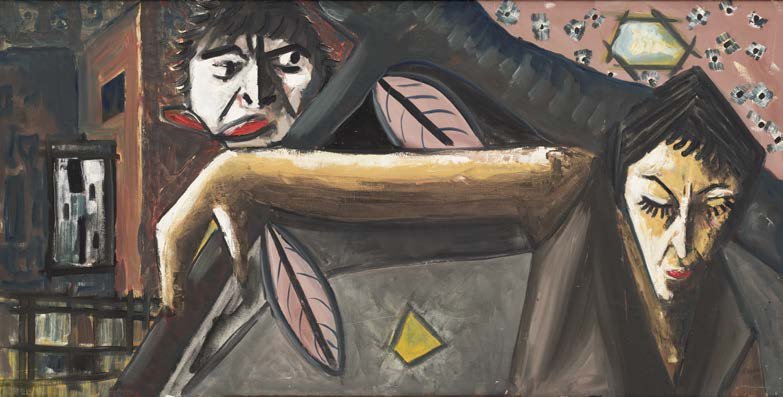
La torture en Algérie · 1960 · Tempera and oil on canvas · 49.5 × 99.5 cm · Sharjah Art Foundation Collection
Courtesy the estate of the artist and Sfeir-Semler Gallery, Beirut/Hamburg · Photo: Walid Rashid
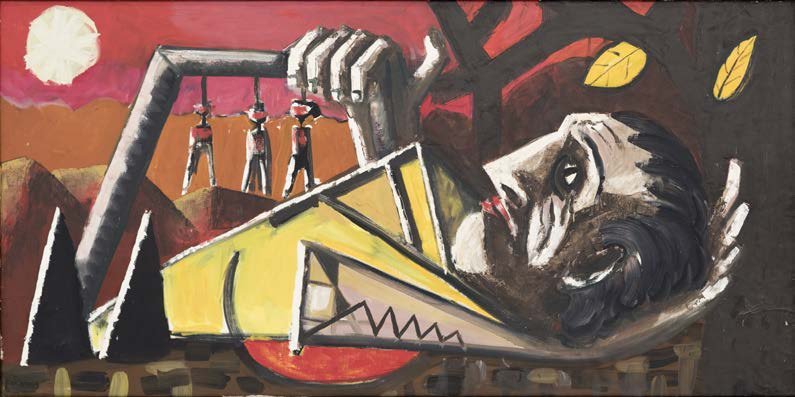
L’Europe avec la liberté égalité fraternité—Algérie · 1960 · Tempera and oil on canvas · 49.5 × 99 cm · Sharjah Art Foundation Collection
Courtesy the estate of the artist and Sfeir-Semler Gallery, Beirut/Hamburg · Photo: Walid Rashid
April 4, 1960
Senegalese independence
Senegal achieves independence under the presidency of Leopold Sedar Senghor.
August 31 – September 7 1960 · Study, teaching and encounters
L’Atelier Rayess opens in Aley
Opening of “L’Atelier Rayess” [The Rayess Workshop] at the family home in Aley to Lebanese and visiting foreign artists under the patronage of Kamal Jumblatt and in the company of Shafiq al-Faqih and Roger and Monique Caron. Rayess and al-Faqih taught drawing, engraving and painting; Roger and Monique Caron taught tapestry. Monique taught drawing free of charge to the children of the village.
Period 04 · 1960–1964
Italy
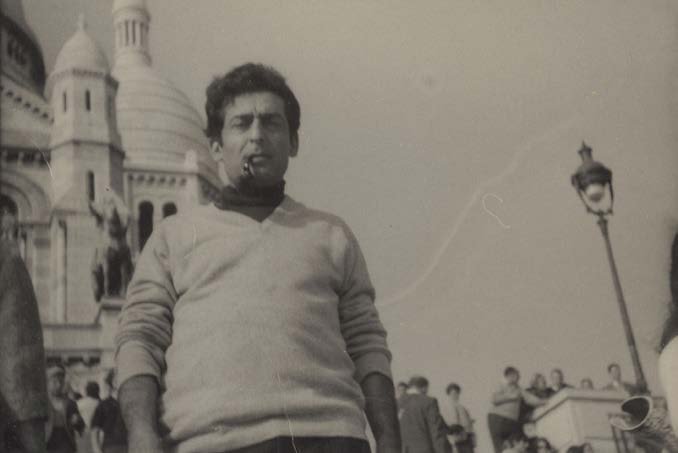
The artist in Paris · 1960s
Courtesy Aref El Rayess Foundation
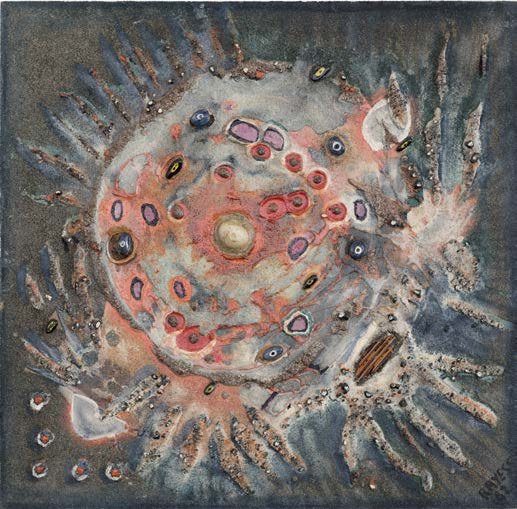
Hommage à Vostok · 1962 · Mixed media on masonite · 61.5 × 60.5 cm
Courtesy the estate of the artist and Sfeir-Semler Gallery, Beirut/Hamburg · Photo: Walid Rashid
October 1960 · Residence and travel
Florence
Left Beirut for Florence, where he stayed for 8 months. Attended the sculpture course by Antonio Berti (1904-1990) at the Accademia di Belle Arti di Firenze [The Florence Academy of Fine Arts].
1961 · Study, teaching and encounters
Meets Lionello Venturi and Nello Ponente
Met Lionello Venturi (1885-1961) and Nello Ponente (1925-1981) who later wrote an influential text about him in 1973, which he translated and published several times in his exhibition catalogues.
1961 – 1962 · Exhibitions
Group exhibitions with Galleria Numero and Galleria Pogliani
Numerous group exhibitions at the Numero Gallery, curated by Fiamma Vigo (Florence, Milan, Venice, Rome) and at the Pogliani Gallery (Rome and Turin) which represented him.
c. 1961 · Life
His father returns to Lebanon
His father Najib El Rayess left Africa and returned to Lebanon.
Summer 1961 · Residence and travel
Rome
Left for Rome, where he attended the Academy of Fine Arts and the Accademia Internazionale L. da Vinci [L. da Vinci International Academy]. He studied painting and sculpture there from 1961 to 1964. He saw the work of artists from past times – Luca Cambiaso (1527-1585), Florentine drawings from the 16th century – as well as modern ones – Fortunato Depero (1892-1960), Mario Sironi (1885-1961), Renato Guttuso (1911-1987) and Gino Severini (1883-1966), whom he met at his retrospective exhibition at the Palazzo Venezia in Rome in 1961.
November 1961
The Sursock Museum opens in Beirut
Opening of the Sursock Museum in Beirut.
c. 9–20 February 1962 · Exhibitions
Temps – Homme – Machine, Alecco Saab Gallery
Exhibited Temps – Homme – Machine [Time – Man – Machine] at the Alecco Saab Gallery in Beirut – 20 paintings combining various different materials (sand, plaster, stones and molten glass).
1963
Gallery One opens in Beirut
Opening of Gallery One in Beirut by Helen and Youssef el-Khal.
1963 · Commissions, public works and stage design
Sculptures for the New York World’s Fair
Commissioned by the government to represent Lebanon at the New York World Fair (22 April 1964 - 23 April 1965) and produced 2 sculptures: Le Phénicien ou Soldat Phénicien [The Phoenician or Phoenician Soldier] (metal and bronze, 3.5 metres high) and Lubnan (Lebanon), engraved in a block of Lebanese stone 2 metres high. These pieces are now lost (possibly stored in a New York Museum).
14–24 November 1963 · Exhibitions
La Licorne Gallery, Beirut
Exhibition at La Licorne Gallery in Beirut, including paintings from the Temps et Murs [Time and Walls] series and 15 small terracotta sculptures made in Italy, one of which won the Sculpture Prize at the 5th Autumn Exhibition of the Sursock Museum in December 1965. On the same occasion, he won the Painting Prize with one of the pieces in the series Hommage au Tapis Volant [Homage to the Flying Carpet], now part of the Sursock Museum collections.
1964 · Study, teaching and encounters
Among the New York painters
His friend John Ferren introduced him to the New York abstract expressionist painters who frequented Dore Ashton’s Salon. He met Mark Rothko, John Franklin Koenig, Joseph Albers and Robert Rauschenberg and befriended Hans Hofmann and Frederick Kiesler, to whom he dedicated a small painting, Naître c’est commencé (sic) à mourir [Birth is the beginning of death], 1964.
Period 05 · 1964–1965
USA and Mexico
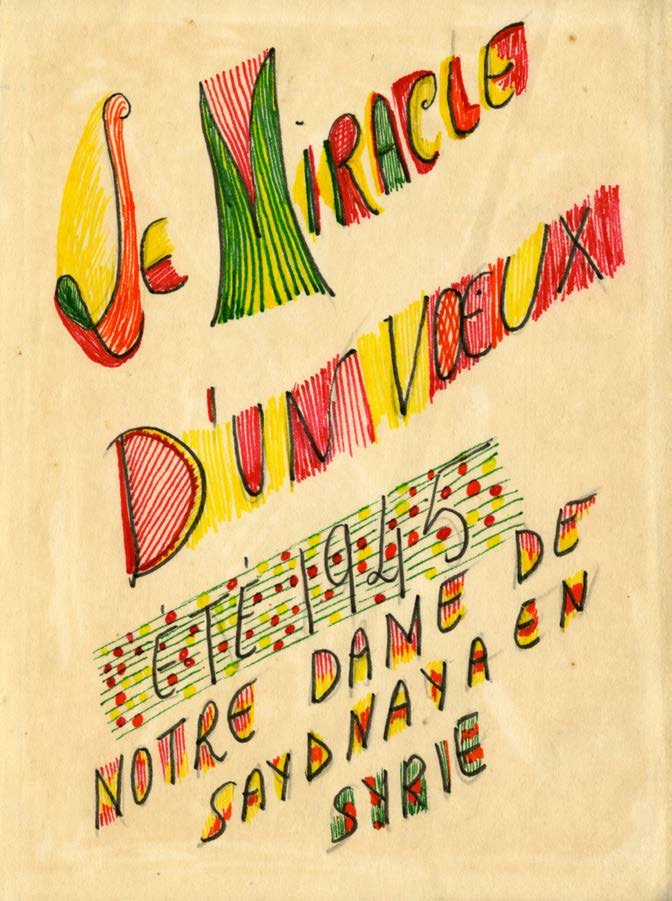
Al nour (Light) Hollywood · 1965 · Leporello (folding notebook)
Courtesy Aref El Rayess Foundation
May 3, 1964 · Residence and travel
Arrives in New York
Arrived in New York on the invitation of the US government as part of an international education and cultural exchange programme.
1965 · Residence and travel
Three months in Mexico
Stayed in Mexico for three months, during which time he met Rufino Tamayo (1899-1991) and the new generation of Mexican artists. Some of his work remained at the Misrachi Gallery in Mexico City.
7–20 January 1965 · Exhibitions
Excelsior Gallery, Mexico City
Exhibited at the Excelsior Gallery in Mexico City on the recommendation of Rodolfo Usigli, a writer and the Mexican ambassador to Beirut.
Period 06 · 1965–1975
Beirut: Dar El Fan, teaching and politics
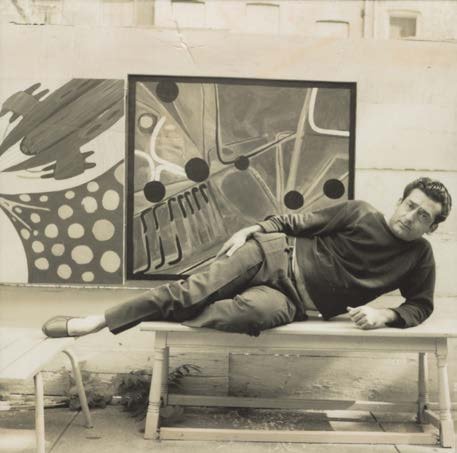
The artist in his studio · 1960s
Courtesy Aref El Rayess Foundation
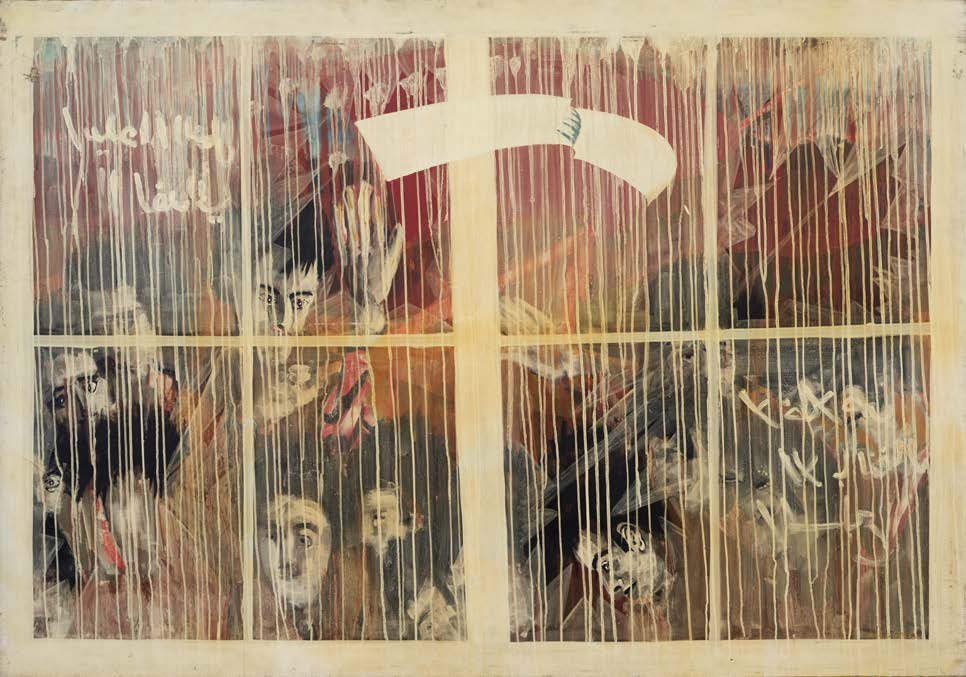
Nafizat Al Amal (Window of Hope: Commemoration of the Shame of the Israeli Destruction of Beirut Airport) · 1969 · Lacquer and oil on canvas · 139.5 × 200 cm
Courtesy the estate of the artist and Sfeir-Semler Gallery, Beirut/Hamburg · Photo: Walid Rashid
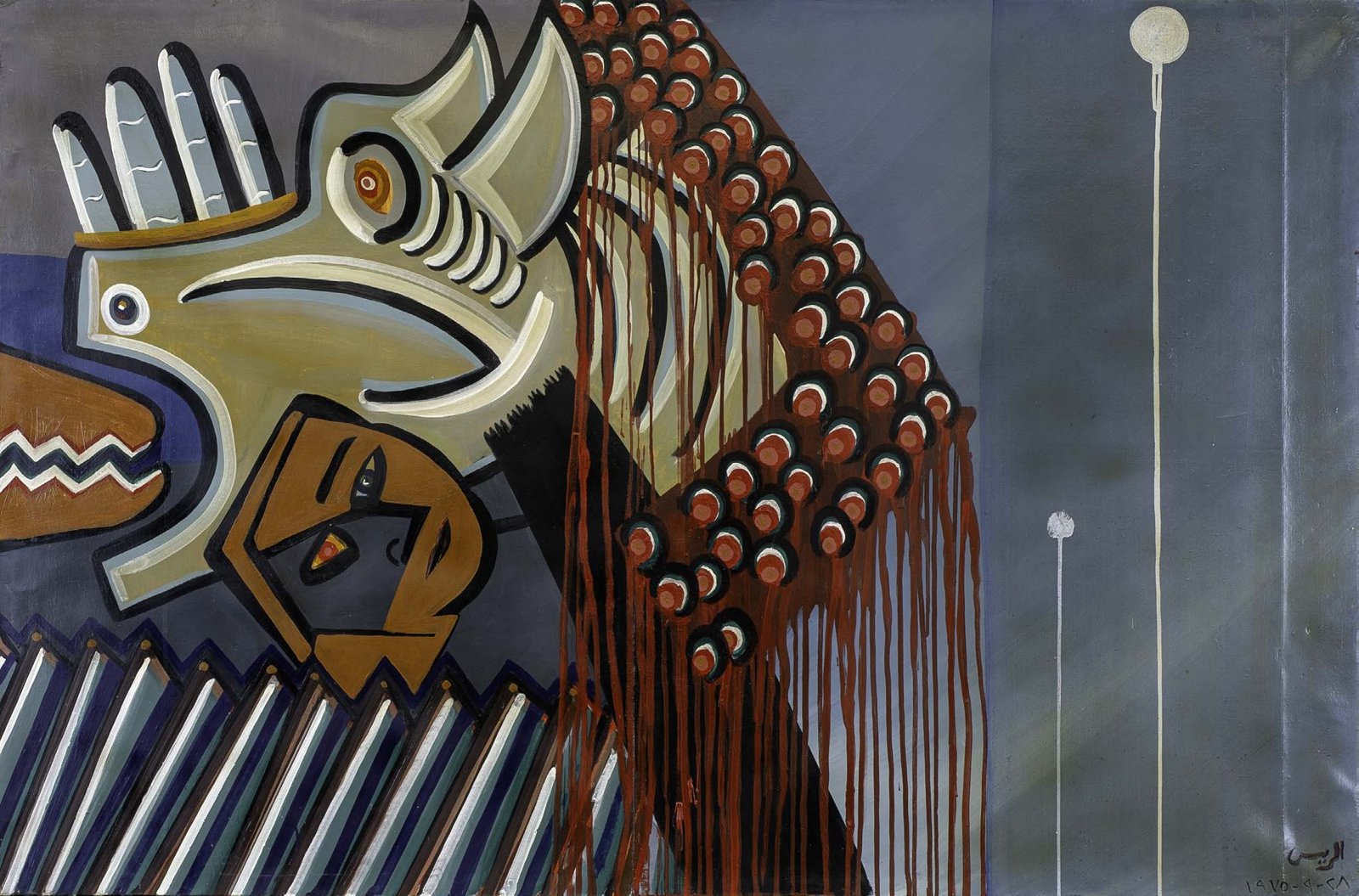
Al Hakem (The Ruler) · 1975 · Oil on canvas · 99 × 150 cm
Courtesy the estate of the artist and Sfeir-Semler Gallery, Beirut/Hamburg · Photo: Volker Renner
5–25 December 1965 · Exhibitions
First exhibition of Lebanese art in Yugoslavia
Participated in the first exhibition of Lebanese art in Yugoslavia, held in Belgrade (45 paintings and 4 sculptures were on display and were exhibited for a few days in Zagreb) as part of an official cultural exchange between the two countries. Several pieces by Rayess produced in Italy were shown, including four “Algerian” works.
December 7, 1965 – January 7, 1966 · Awards and prizes
First Prize, Sursock Museum Autumn Salon
Participated in the Fifth Sursock Museum Autumn Exhibition and won the First Prize for Sculpture and Painting.
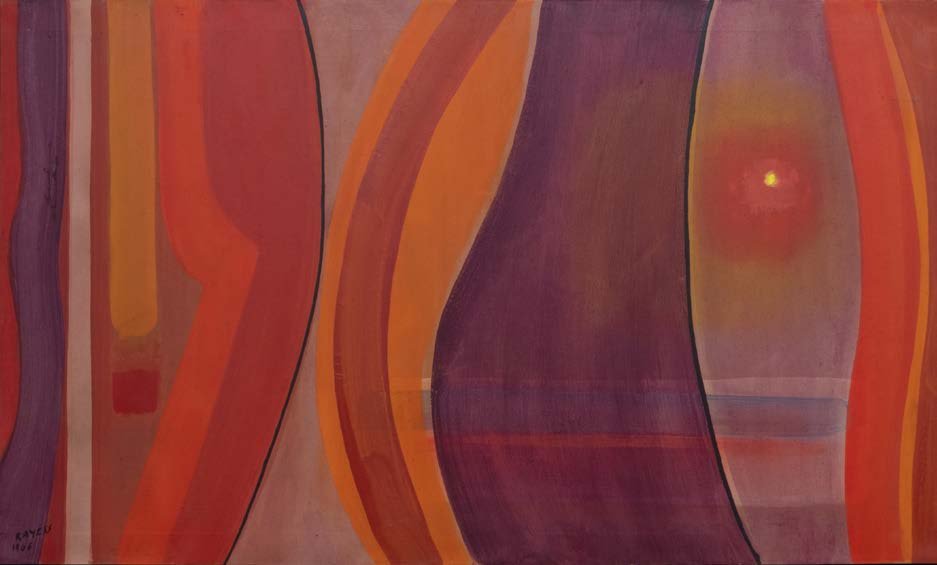
Tapis Volant (Flying Carpet) · 1966 · Tempera on canvas · 89.2 × 150.5 cm · Collection Andrée Sfeir-Semler
Courtesy the estate of the artist and Sfeir-Semler Gallery, Beirut/Hamburg · Photo: Volker Renner
1966 · Residence and travel
Returns to Lebanon
He travelled to Italy and then returned to Lebanon on the request of his artist friends.
1966 · Study, teaching and encounters
Co-founds the Institute of Fine Arts, Lebanese University
Became involved in creating the Institute of Fine Arts (now Faculty of Fine Arts and Architecture) at the Lebanese University, with, among others, the artists Nicolas Nammar, Jean Khalifé, Rachid Wehbe, Mounir Eido, Said Akl, Saloua Raouda Choucair, Antoine Moultaka, Mounir Abou Debs, the calligrapher Al Baba, and the architects Khalil Khoury, Riad Douaik and Wathik Adib. He taught two classes until 1980: Analysis and Composition, and Techniques.
1966 · Commissions, public works and stage design
Passage, a sculpture for Los Angeles
Created the sculpture Passage (Lebanese stone, 185 x 80 x 85 cm) for the collectors Harry and Phyllis Sherwood in Los Angeles. It was shipped there at the end of 1967.
1967 · Institutions and cultural life
Dar El Fan
Supported his friend Janine Rubeiz in setting up Dar El Fan Wal-Adab (The House of Art and Literature) in Beirut, of which he was an active board member. Commonly known as Dar El Fan, the space was active until the mid-1970s, organising exhibitions, film screenings, lectures and debates, poetry evenings and concerts, inviting major Lebanese and international artists from the 1960s-70s.
c. 1967 · Institutions and cultural life
Founds the Union of Painters
Established the Union of Painters, which he led for 12 years.
1967 · Major works and series
A painting for Che Guevara
He painted a canvas which was later reproduced on a poster.
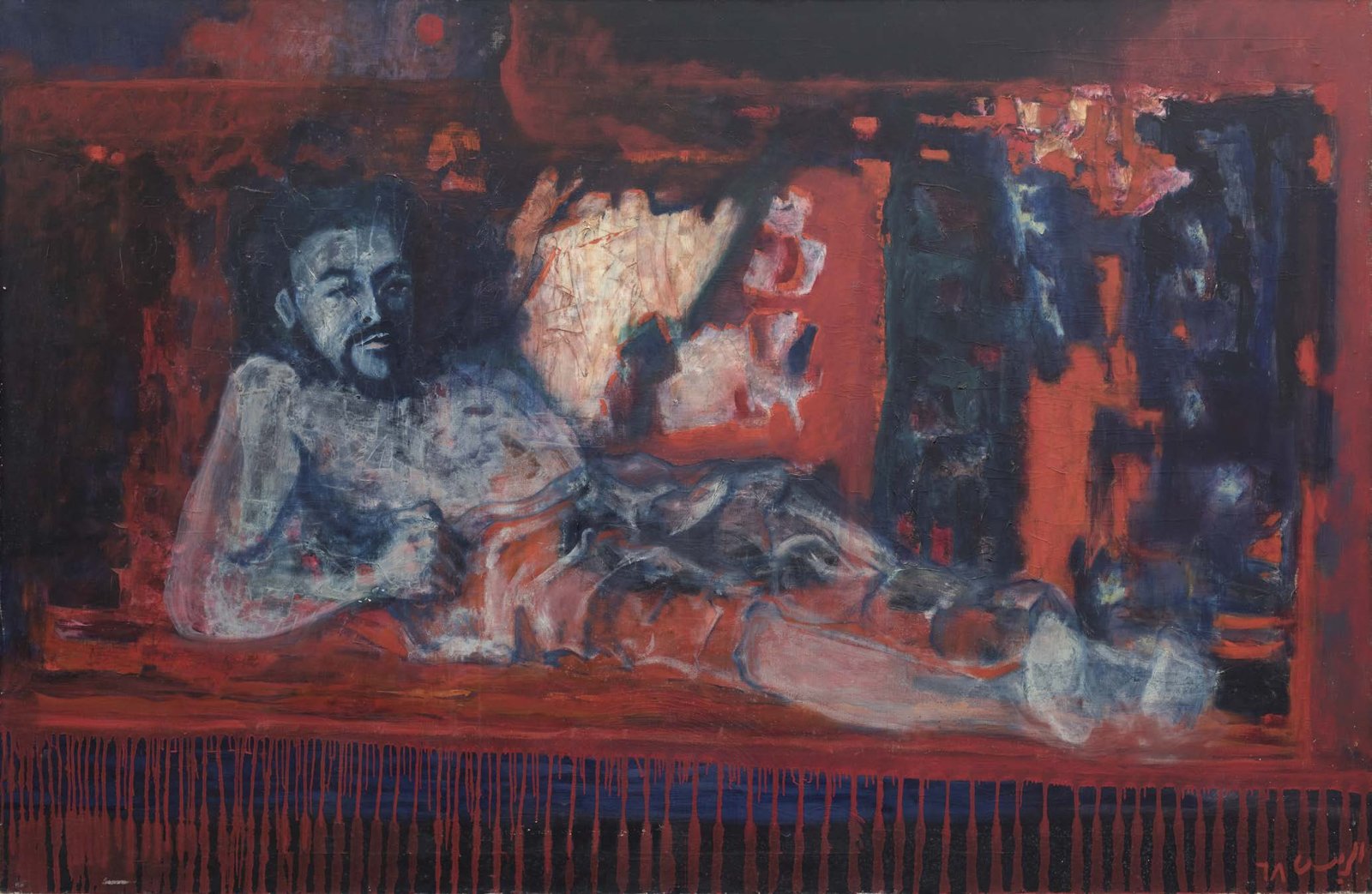
Résurrection de Che Guevara “Le Palestinien” (Sang et Liberté) · 1968 · Oil on canvas · 130 × 200 cm
Courtesy the estate of the artist and Sfeir-Semler Gallery, Beirut/Hamburg · Photo: Walid Rashid
5–10 June 1967
The Six-Day War
Six Days War.
![Le 5 juin (Sang et Liberté) (June 5th [Blood and Freedom]), 1967, by Aref El Rayess](/images/timeline/work-1967-le-5-juin.jpg)
Le 5 juin (Sang et Liberté) (June 5th [Blood and Freedom]) · 1967 · Oil on canvas · 149 × 200 cm · Saradar Collection
Courtesy the estate of the artist and Sfeir-Semler Gallery, Beirut/Hamburg · Photo: Walid Rashid
c. June 7, 1967 · Commissions, public works and stage design
Sculptures for a Yorkshire estate
Start of his stay in Leeds (Yorkshire, Great Britain) on the invitation of Tony Johnson, a collector, who commissioned two sculptures for the park on his estate. During this period, he worked in the Crosland Hill quarries, near the property of the sculptor Henry Moore.
October 9, 1967
Death of Che Guevara
Che Guevara dies in Bolivia.
1968 · Writing and publications
Juin et les Mécréantes, with Nadia Tueni
Publication of Juin et Les Mécréantes [June and the Miscreants], the third collection by the Lebanese poet Nadia Tueni (1935-1983), published by Pierre Seghers in Paris. The book, with a print run of 458 copies, was accompanied by the portfolio Juin et les mécréantes raconté par Aref Rayess [June and the Miscreants narrated by Aref Rayess], including 12 illustrations, in the same 18.5 x 24.8 cm format.
January 9, 1968
OAPEC agreements signed in Beirut
Signing of the OAPEC (Organisation of Arab Petroleum Exporting Countries) Agreements in Beirut.
10–20 April 1968 · Exhibitions
Sang et Liberté
Sang et Liberté [Blood and Freedom] exhibition at the gallery of the daily newspaper L’Orient, which deeply impressed Henri Seyrig, (ex-director of Antiquities for Syria and Lebanon during the French Mandate and then director of Musée du Louvre). The same exhibition was displayed from 15 to 25 May at the family home in Aley.
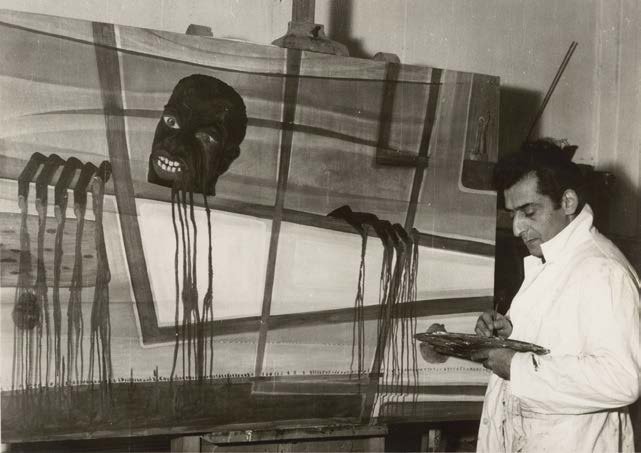
The artist in his studio in Aley, Lebanon · 1968
Courtesy Aref El Rayess Foundation
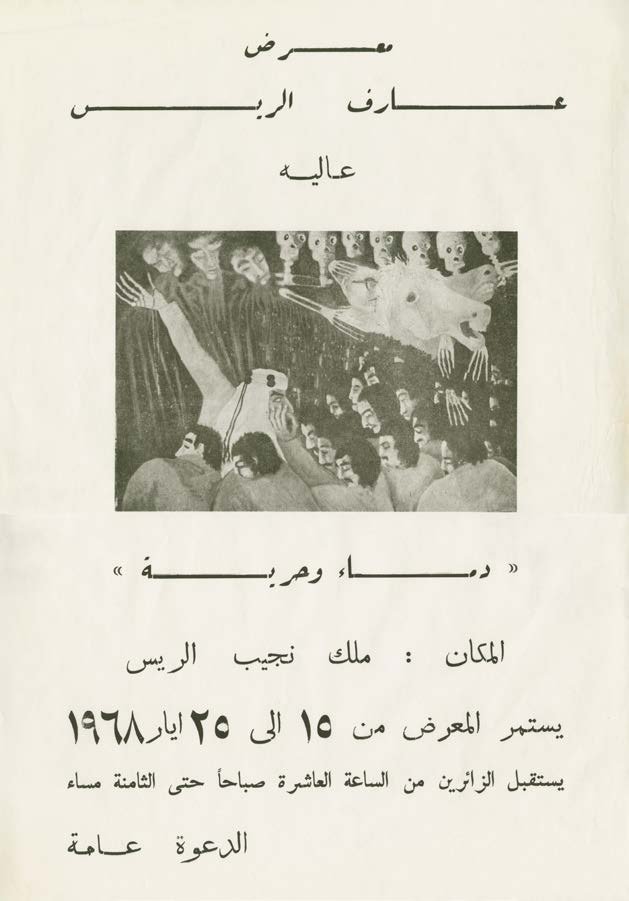
Poster of the exhibition Blood and Freedom at the artist’s studio in Aley, 15-25 May 1968 · 1968
Courtesy Aref El Rayess Foundation
Le 5 juin (Sang et Liberté) (June 5th [Blood and Freedom]) · 1967 · Oil on canvas · 149 × 200 cm · Saradar Collection
Courtesy the estate of the artist and Sfeir-Semler Gallery, Beirut/Hamburg · Photo: Walid Rashid
Résurrection de Che Guevara “Le Palestinien” (Sang et Liberté) · 1968 · Oil on canvas · 130 × 200 cm
Courtesy the estate of the artist and Sfeir-Semler Gallery, Beirut/Hamburg · Photo: Walid Rashid
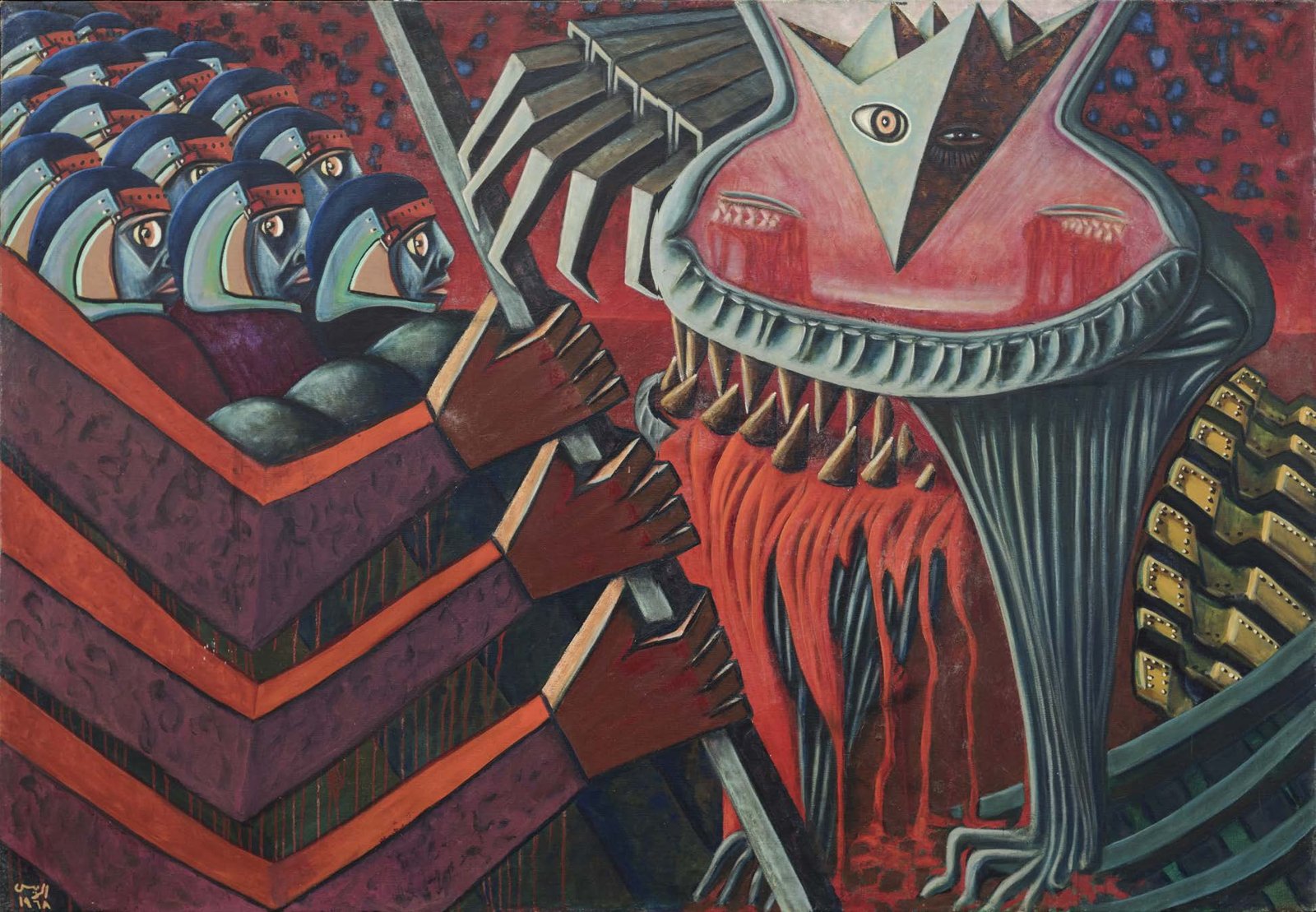
Technologie et révolution (Sang et Liberté) · 1968 · Oil on canvas · 139 × 200 cm
Courtesy the estate of the artist and Sfeir-Semler Gallery, Beirut/Hamburg · Photo: Walid Rashid
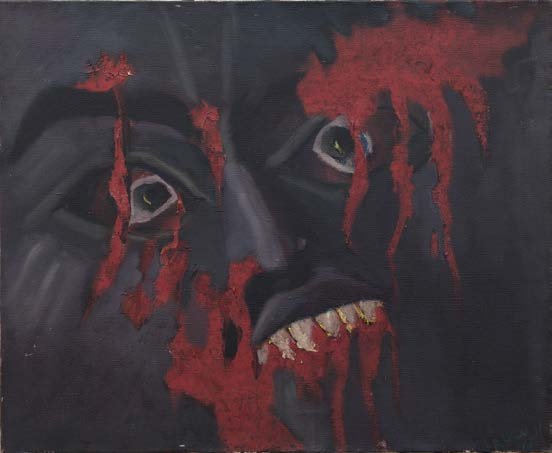
La Civilisation du Napalm—Wahshiyat al Napalm (Sang et Liberté) · 1968 · Oil on canvas · 49.5 × 60 cm
Courtesy the estate of the artist and Sfeir-Semler Gallery, Beirut/Hamburg · Photo: Walid Rashid
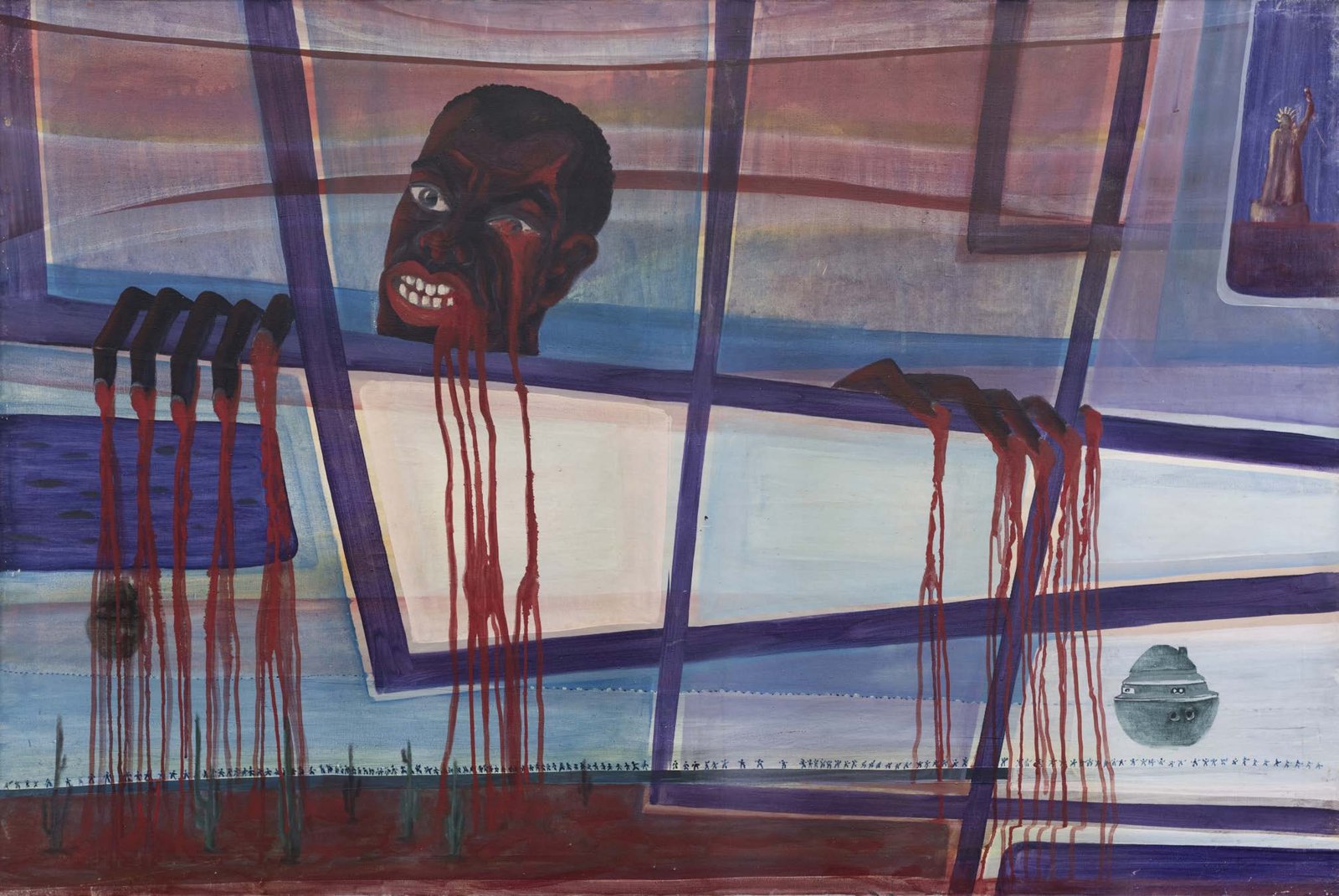
Hommage à Martin Luther King (Sang et Liberté) · 1968 · Oil on canvas · 150 × 101 cm · Saradar Collection
Courtesy the estate of the artist and Sfeir-Semler Gallery, Beirut/Hamburg · Photo: Walid Rashid
1969 · Commissions, public works and stage design
Set design for Al-Zanzalakht
Berg Vasilian commissioned Rayess to design the set for his production of Al-Zanzalakht [The Chinaberry] by the Lebanese playwright Issam Mahfouz (1939-2006).
1969 · Political engagement
A manifesto on freedom of thought
The book Critique de la pensée religieuse [Critique of Religious Thought] by the Syrian political philosopher Sadek Jalal al-Azm was censored. The Arab Cultural Circle convened a meeting of some 60 writers and journalists. A committee was then formed with Aref El Rayess to draft a manifesto.
January 27, 1969 · Exhibitions
Retrospective at the National Museum, Damascus
Aref Rayess. Retrospective 1957-1968 exhibition at the National Museum in Damascus. First solo exhibition in an Arab country outside Lebanon.
March 1969 · Exhibitions
Au service des Fédayins, Tripoli
Collective exhibition at the Tripoli Cultural Centre (Lebanon), the topic of which was Au service des Fédayins [Serving the Fedayeen]. Rayess had 16 paintings on display.
April 23, 1969 · Political engagement
Injured at a demonstration
Violent demonstrations in Beirut and Saida in support of the Fedayeen. Rayess attended the demonstrations and was injured by a gendarme.
Summer 1969 · Commissions, public works and stage design
Set for Jibal Assawan, Baalbeck Festival
Designed the set for the operetta Jibal Assawan by the famous Rahbani brothers, performed at the Baalbeck Festival (14 July to 2 August), whose heroine was Feyrouz, the great Lebanese singer.
1970 · Major works and series
A painting for Nasser
Rayess painted a work (unidentified) for the occasion.
September 28, 1970
Death of Gamal Abdel Nasser
Gamal Abdel Nasser dies.
October 11, 1970 · Life
A scene filmed in his studio
The Lebanese Director Christian Ghazi (1934-2013) shot a scene from his film Cent visages pour un seul jour [One Hundred Faces for a Single Day] in Rayess’s studio in Aley. About twenty friends met at the artist’s place for the occasion: Jean Kyrillos, Helen Khal, Wassek Adib, Waddah Fares, Salwa Baroody and Farid El Rayess. Recent paintings by Rayess were shown on screen, and were later exhibited at Dar El Fan on 29 October.
October 29 – November 21 1970 · Exhibitions
Amour, Mort, Révolution, Dar El Fan
Exhibited the series Amour, Mort, Révolution [Love, Death and Revolution] at Dar El Fan, including 26 recent paintings.
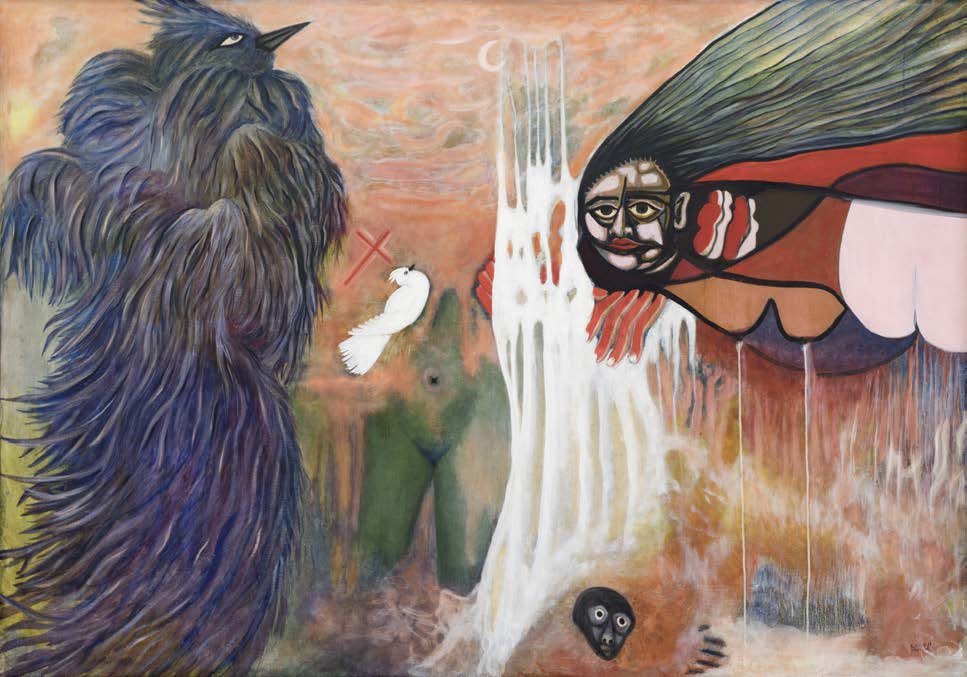
Idelogiyat (Ideologies), Summer 1970 · 1970 · Oil on canvas · 139 × 200 cm · Sharjah Art Foundation Collection
Courtesy the estate of the artist and Sfeir-Semler Gallery, Beirut/Hamburg · Photo: Walid Rashid
November 25 – December 5 1970 · Exhibitions
Printemps et Fleurs, Manoug Gallery
Printemps et Fleurs [Spring and Flowers] exhibition at the Manoug Gallery in Beirut.
December 6, 1970 · Institutions and cultural life
First Arab Congress of Visual Arts, Damascus
Attended the First Arab Congress of Visual Arts, held at the National Museum in Damascus, as a member of the committee of the Association of Lebanese Painters and Sculptors. The Union Générale des Artistes Plasticiens Arabes [General Union of Arab Visual Artists] (UGAPA) was founded at this Congress as a way to coordinate the various artists’ unions and associations in Arab countries.
1972 · Commissions, public works and stage design
Set for Le Prince Rouge
Designed the set for the play entitled Le Prince Rouge [The Red Prince] by the Lebanese playwright Yaacoub Chidrawi, an adaptation of the novel by the Lebanese writer Maroun Abboud.
January 10, 1972 · Commissions, public works and stage design
Meets Hassan Fathy
The Egyptian architect Hassan Fathy (1900-1989) gave a lecture at Dar El Fan (La contemporanéité en architecture arabe moderne [Contemporaneity in modern Arab architecture].) where he met with Rayess who would end commissioning him the plans for his house in Ouzaï, south of Beirut. The famous village of Gourna designed by Fathy close to Louxor would inspire Rayess a series of pastel drawings.
February 14, 1972 · Exhibitions
Six Contemporary Lebanese Artists, Contact Gallery
Participated in the inaugural exhibition of the Contact Gallery curated by Waddah Fares, Six Contemporary Lebanese Artists.
April 27, 1972 · Writing and publications
Manifesto: With Whom and Against Whom?
Published a 22-page political manifesto entitled Maʿ man wa-ḍud man? [With whom and against whom?].
2–10 May 1972 · Exhibitions
Contemporary Arab Art Exhibition, Baghdad
Took part in the Contemporary Arab Art Exhibition in Baghdad, organised by the Ministry of Communication, with pieces from the series Amour, Mort, Révolution [Love, Death and Revolution].
June 16, 1972 · Political engagement
A gift to Algeria
Offered Salut aux martyrs de la révolution Algérienne [Tribute to the Martyrs of the Algerian Revolution], completed in Florence in 1960, to the Algerian Ambassador to Lebanon Mohamed Yazid at the Dar El Fan office to celebrate the tenth anniversary of Algeria’s independence. The piece was then delivered to the National Museum of Fine Arts in Algiers on 19 September. The current location of this major work is unknown, despite a lengthy investigation and numerous and repeated requests sent to the Algerian cultural authorities and to various local art historians and critics, which have remained unanswered; and despite its specific mention on the museum’s website.
4–11 September 1972 · Institutions and cultural life
3rd Arab Congress of Plastic Arts, Hammamet
Participated in the 3rd Arab Congress of Plastic Arts in Hammamet (Tunisia) organised under the auspices of UNESCO and the UGAPA.
23–28 October 1972 · Exhibitions
First Pan-Arab Festival of Plastic Arts, Damascus
Participated in the First Pan-Arab Festival of Plastic Arts in Damascus entitled “Plastic Arts for the Fight for Liberation” with a piece entitled Septembre Noir [Black September].
February 28 – March 16 1973 · Exhibitions
Les fleurs de la rue Al-Moutanabbi, Contact Gallery
Exhibited Les fleurs de la rue Al-Moutanabbi [The Flowers of Al-Moutanabbi Street - Place des Martyrs] at the Contact Gallery (7 oil paintings, 8 ink drawings and 25 Caran d’Ache pencil drawings).
April 1973 – May 1973 · Institutions and cultural life
First UGAPA Congress, Baghdad
Took part with other Lebanese artists (Jean Khalifé, Mounir Eido, Halim Jurdak and Moussa Tiba) in the First UGAPA Congress in Baghdad.
November 21 – December 8 1973 · Exhibitions
Oil pastels at Gallery One
Exhibited some forty oil pastels depicting Lebanese landscapes at Gallery One.
1974 · Writing and publications
Illustrations for Amal Joumblatt
Works (collages and gouaches) on all the pages of Amal Joumblatt’s (1949-1982) collection of poems L’Absence ou Anti-Poésie [Absence or Anti-Poetry], published in 1974 and whose cover illustration is by Paul Guiragossian. Etel Adnan mentioned in an article published in L’Orient-Le Jour on 29 July 1974 that Rayess “walks around with this unique copy, which could one day be published as a limited edition”.
11–23 January 1974 · Exhibitions
Chapitres du Tiers Monde, Dar El Fan
Exhibited in Dar El Fan the series of 22 drawings titled Chapitres du Tiers Monde [Chapters of the Third World]. These pieces were later published at the end of the book Road to Peace published in 1978.
March 15 – April 15 1974 · Exhibitions
Baghdad Biennale
Took part in the Baghdad Biennale organised by UGAPA.
January 14 – February 1 1975 · Exhibitions
des fleurs, des femmes, et des atomes, Galerie Le Point
Exhibited des fleurs, des femmes, et des atomes [flowers, women and atoms] at Galerie Le Point. Some fifty pieces produced between 1957 and 1975 were shown. The catalogue contained a presentation from 1973 by Etel Adnan and a text by Nello Ponente.
April 13, 1975
The Lebanese Civil War begins
Start of the Lebanese Civil War (which officially ended on 13 October 1990, following the Taif Agreement signed the previous year).
Period 07 · 1975–1976
Algeria
December 1975 · Residence and travel
Invited to Algeria
Official Algerian invitation to exhibit at the Galerie Racim in Algiers.
1976 · Major works and series
The Road to Peace
In 1976 he produced a major series of drawings and engravings depicting the violence of the first two years of the Civil War. These drawings were compiled in Road to Peace, a book self-published in Beirut in 1978 and distributed to 16 libraries, including Columbia University Library (New York), The Library of Congress (Washington), Harvard College Library (Cambridge), Princeton University Library and the Bayerische Staatsbibliothek (Munich).
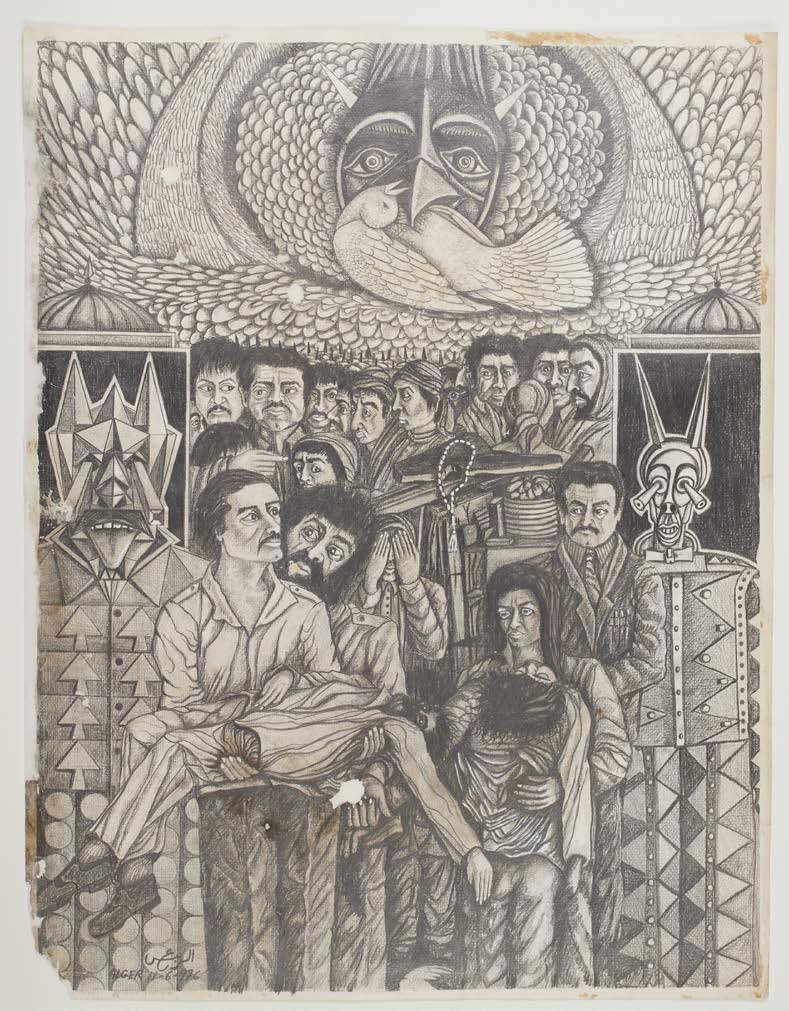
Tariq Alsilm—Kabous Alsilm (Road to Peace—The Nightmare of Peace) · 1976 · Pencil on paper · 64.5 × 50 cm
Courtesy the estate of the artist and Sfeir-Semler Gallery, Beirut/Hamburg · Photo: Volker Renner
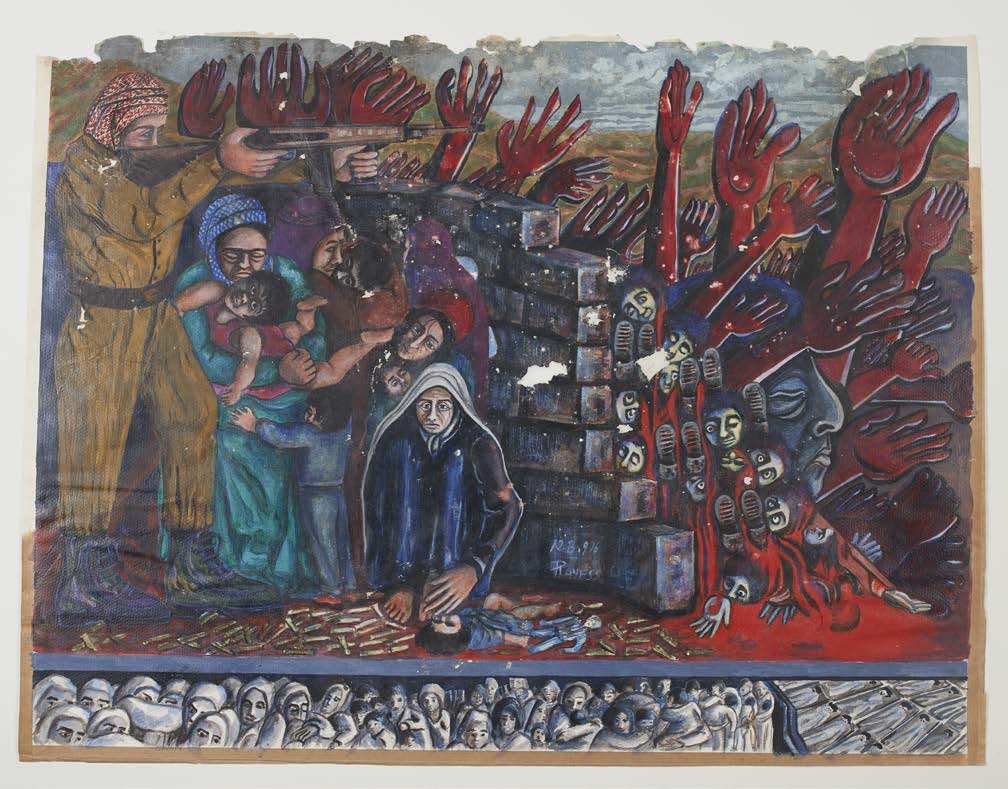
Tariq Alsilm—Tel al-Zaatar (Road to Peace—Tel al-Zaatar) · 1976 · Gouache on paper · 50 × 65.5 cm
Courtesy the estate of the artist and Sfeir-Semler Gallery, Beirut/Hamburg · Photo: Volker Renner
24–28 February 1976 · Institutions and cultural life
First National Seminar on Visual Arts, Algeria
Took part in the First National Seminar on Visual Arts organised by the UNAP, in collaboration with the Farmers’ Union, in the Agricultural Village of Tessela Merdja (Algeria). Gave a lecture on behalf of the Lebanese delegation, as President of the Association of Lebanese Artists and Sculptors, entitled “Arab Art, between duty and commitment”. There he met the Cuban artist Carmelo Gonzalez (1920-1990), at the time the chairman of the Association of Cuban Artists.
April 21 – May 9 1976 · Exhibitions
Galerie Racim, Algiers
Exhibition Hommage à la marche de la Révolution Arabe et du Tiers Monde [Tribute to the march of the Arab Revolution and the Third World] at the Galerie Racim, organised by the UNAP under the auspices of the National Organisation of Former Moudjahidines. Printed in the brochure of the text by Nello Ponente, translated into Arabic with a portrait of Rayess by Carmelo. Among other things, he introduced Temps modernes et Tiers-Monde [Modern Times and the Third World]. La marche des peuples du Tiers-Monde entre le Développement et la Révolution [The march of the peoples of the Third World between Development and Revolution] 1974-1975.
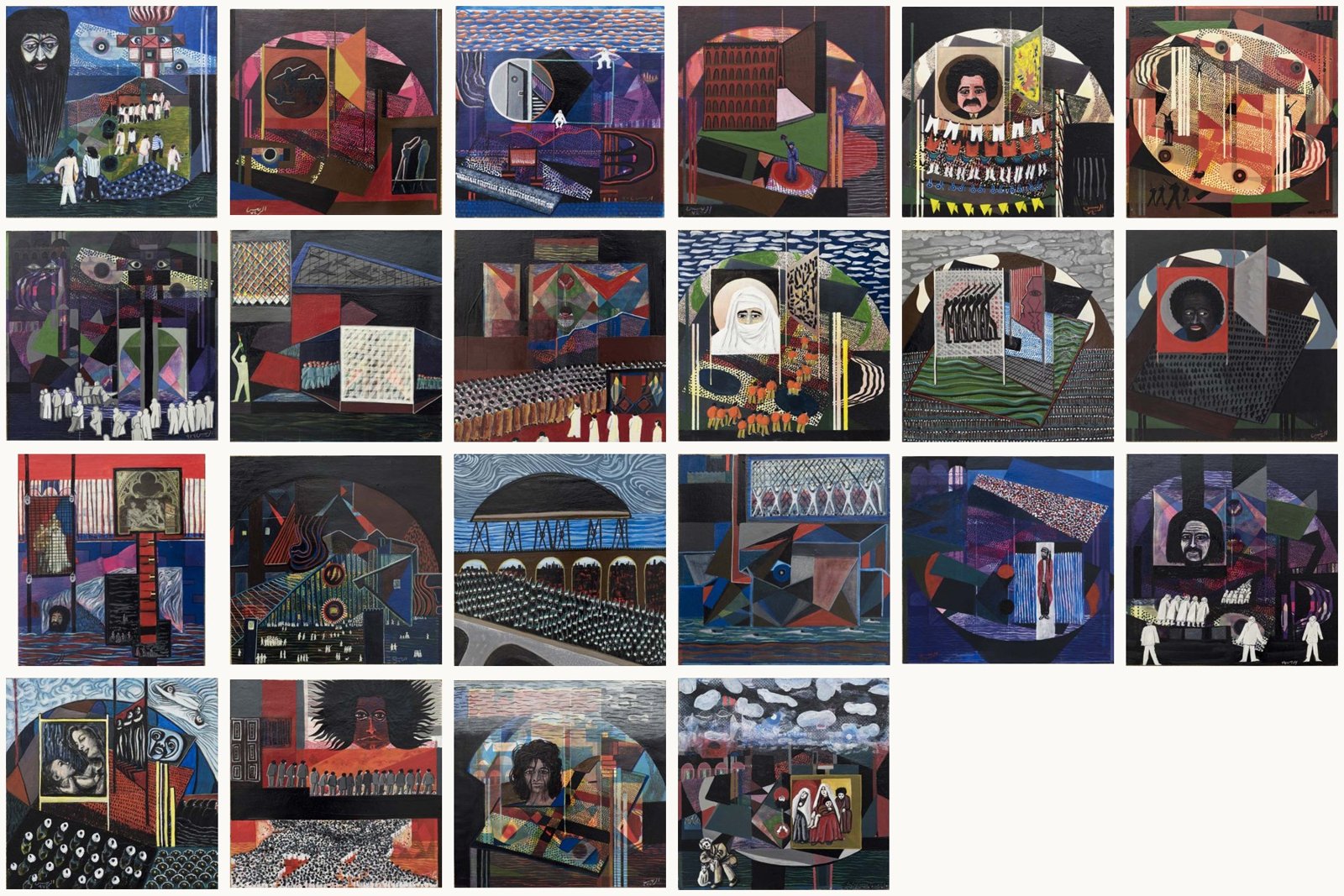
Temps Moderne et Tiers Monde (Modern Times and Third World) · 1974–75 · Enamel paint on masonite · 22 parts, each c. 26.5 × 26.5 cm
Courtesy the estate of the artist and Sfeir-Semler Gallery, Beirut/Hamburg · Photo: Walid Rashid
June 28 – July 4 1976 · Political engagement
Speech at the Algiers conference on the rights of peoples
Took part in the Conférence Internationale pour la Proclamation de la Charte des Droits des Peuples [International Conference for the Proclamation of the Charter of the Rights of Peoples] (Algiers) where he delivered a speech on July 3rd.
Period 08 · 1976–1981
Beirut and the civil war
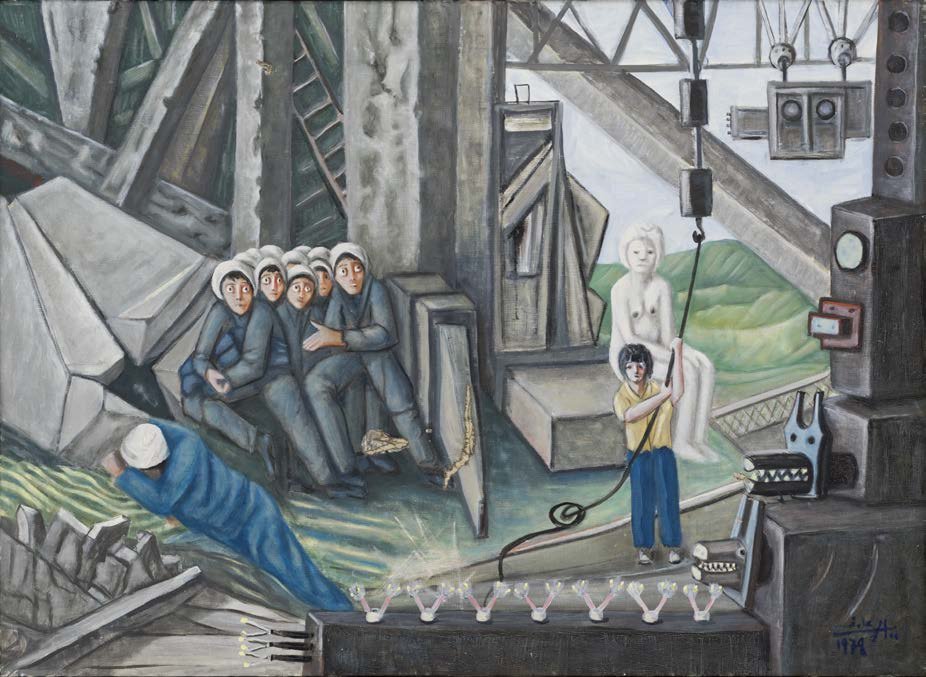
Désastre de la guerre populaire libanaise (Disaster of the Lebanese Popular War) · 1978 · Oil on canvas · 80 × 110 cm
Courtesy the estate of the artist and Sfeir-Semler Gallery, Beirut/Hamburg · Photo: Walid Rashid
c. 1977 · Major works and series
Drawings for Ananda-Félicité
In an article in L’Orient-Le Jour dated 17 February 1978, Rayess mentions a series of Indian ink drawings illustrating poems from the collection Ananda-Félicité published by Kamal Jumblatt in 1975, produced for a publication that never came out.
March 16, 1977
Assassination of Kamal Jumblatt
Kamal Jumblatt was assassinated in Baakline in the Chouf. Four of Rayess’ works were on display at the exhibition-homage organised in Beirut in 1978: L’affrontement [Confrontation]; As-Suwayda; Sources; Jardin [Garden].
March 21 – April 5 1978 · Exhibitions
International Visual Arts Exhibition for Palestine
Took part in the International Visual Arts Exhibition for Palestine organised in Beirut by the Palestine Liberation Organisation (PLO) in the basement of the Arab University. The exhibition featured some 200 paintings by artists from 31 different countries.
1979 · Exhibitions
Colonnes de Lumière at the 23rd UNESCO Salon
Took part in the 23rd UNESCO Salon of Painting and Sculpture in Beirut with his sculpture project Colonnes de Lumière [Columns of Light], which was installed in Jeddah in 1981.
1979
Épreuve d’Artiste Gallery opens
Amal Traboulsi opened the Épreuve d’Artiste Gallery in Beirut.
April 22 – May 5 1980 · Exhibitions
The Reality of Reality, Épreuve d’Artiste
Exhibited oil pastels, Chinese inks and sculptures under the title Wāqiʿ min wāqiʿ (The Reality of Reality) at the Épreuve d’Artiste Gallery.
November 18, 1980 · Exhibitions
Exhibition in Ciudad Bolívar, Venezuela
Exhibited in Ciudad Bolivar, Venezuela. The invitation-brochure reproduced Nello Ponente’s 1973 text (translated into Spanish) and Carmelo’s Algerian portrait of Rayess.
c. 1981 · Commissions, public works and stage design
The Jeddah open-air museum
Took part in the city embellishment project initiated by the governor of Jeddah, Mohammed Said Farsi, an engineer trained in Cairo and a collector, in collaboration with the Spanish architect Julio Lafuente. The project is often referred to as an “open-air museum” or “Corniche”, and displayed sculptures by invited Arab and international artists.
1981 – 1989 · Commissions, public works and stage design
Sculptures for Tabouk and Riyadh
He also produced sculptures of marble and metal for the cities of Tabouk and Riyadh, as well as numerous drawings, models and Utopian architectural projects.
1981 · Commissions, public works and stage design
Column of Light, Jeddah
His 28-metre-high aluminum sculpture Colonne de Lumière [Column of Light], representing the word Allah, was installed in a square in Jeddah.
Period 09 · 1981–1989
Saudi Arabia
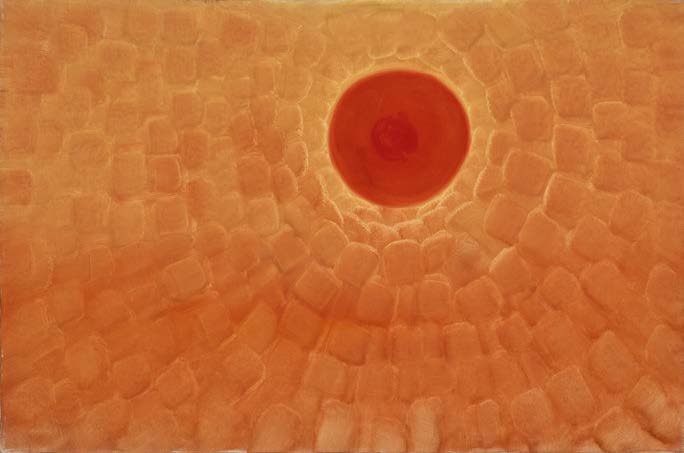
Soleil Rouge · 1982 · Oil on canvas · 61 × 91.5 cm
Courtesy the estate of the artist and Sfeir-Semler Gallery, Beirut/Hamburg · Photo: Walid Rashid
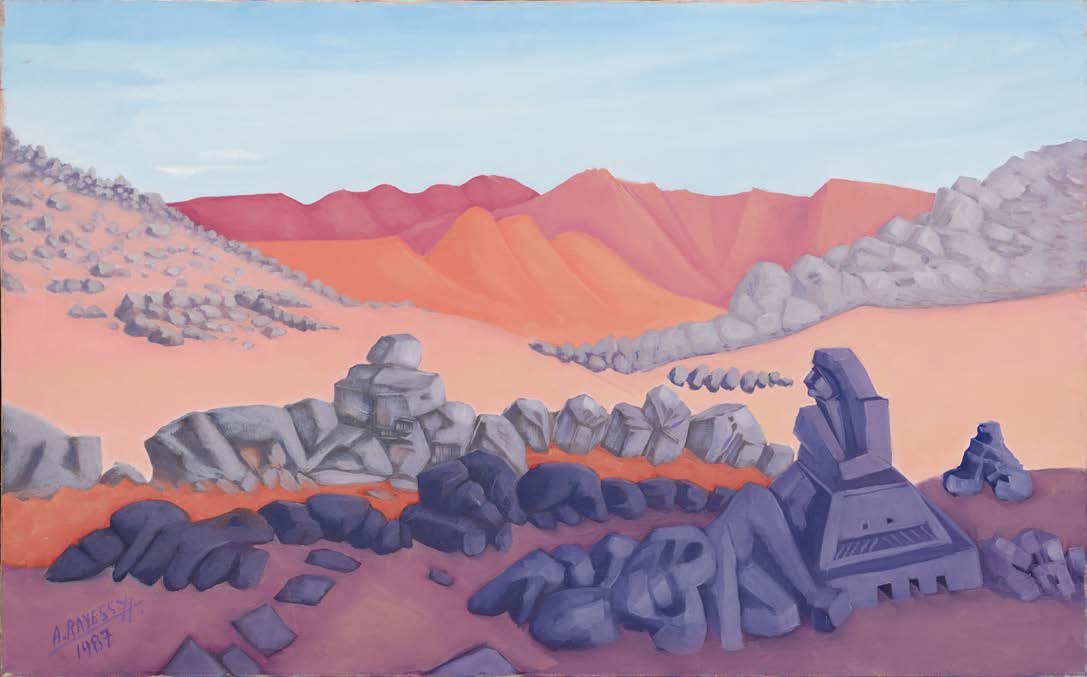
Al Makana Al Hajariya (The Stone Machine) · 1987 · Oil on canvas · 76 × 121.5 cm
Courtesy the estate of the artist and Sfeir-Semler Gallery, Beirut/Hamburg · Photo: Walid Rashid
October 1981 – May 1989 · Residence and travel
Jeddah
Left Lebanon for Jeddah in Saudi Arabia where he lived until May 1989, although he travelled to Lebanon and Italy where he designed and produced several sculptures.
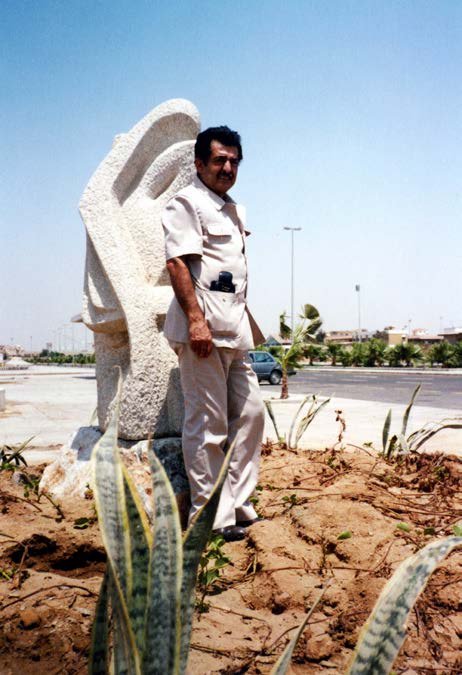
The artist in Jeddah, Saudi Arabia · 1980s
Courtesy Aref El Rayess Foundation
1983 · Life
Death of his mother
Death of his mother.
c. 1983 · Commissions, public works and stage design
Burj al Noor (Light Tower) project
He was also working on Burj al noor (Light Tower), a project designed in memory of King Abdelaziz Ibn Saud, the founder of present-day Saudi Arabia, who died in 1953. This Centre de l’Unité et de l’Unicité [Centre of Unity and Oneness] would include: a mosque, a lecture hall and a media library for Islamic studies, a library preserving the kingdom’s archives, a museum of Islamic arts, and an observatory set atop the tower. The structure featured at each of the four doors one of the four holy books: the Talmud, the Old Testament, the New Testament, and the Koran.
May 1983 · Commissions, public works and stage design
O Seigneur, Tabouk
His sculpture O Seigneur [O Lord] (10 metres high and fixed on 4 Carrara marble seats) made in Pietra Santa (Carrara) in Italy, was installed in Tabouk.
May 7, 1983 · Awards and prizes
Targa Europa 82 Prize
He received the “Targa Europa 82” Prize in Rome for the whole of his work. He could not attend because he was receiving the castings for his O Seigneur [O Lord] sculpture in Jeddah on the same day.
1986 – 1988 · Major works and series
Deserts
Deserts. A significant series of landscapes from Saudi Arabia, a large sequence of which was shown at Janine Rubeiz Gallery under the title Aref Rayess à travers le désert [Aref Rayess through the desert], from 20 March to 12 April 1996.
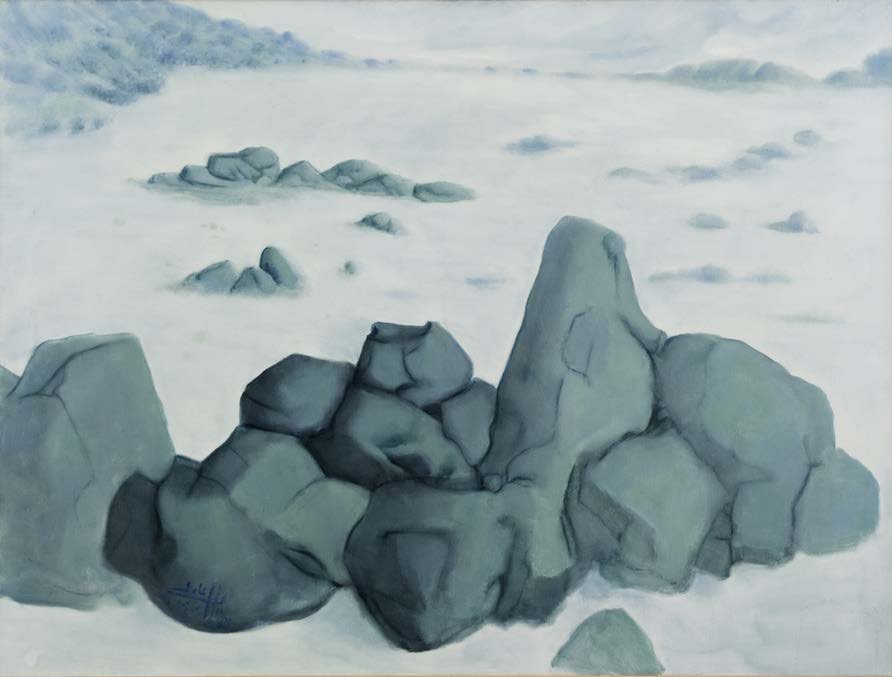
Tariq Altaef (Road to Taef) · 1988 · Oil on canvas · 91 × 121.5 cm
Courtesy the estate of the artist and Sfeir-Semler Gallery, Beirut/Hamburg · Photo: Walid Rashid
March 1986 · Writing and publications
First monograph, by Omran Al-Qaisi
Omran Al-Qaisi published Aref El Rayess’s first monograph on the artist. Rayess, disappointed by the book, refused to organise any events to support publication.
October 1986 – November 1986 · Writing and publications
Six memoirs written in Jeddah
He wrote six memoirs (Nostalgie [Nostalgia]; Divorce; Promenade [A Stroll]; Rancune [Rancour], Amour [Love], Vengeance; Voyage [Journey]; and Voyages [Travels]) in Jeddah, which he sent to the French editor Solange Fasquelle in 1988 having in mind a possible publication.
Late 1980s · Life
L’Arrière-quartier, an unmade film
Screenplay for L’Arrière-quartier [The Backstreet], written by the Franco-Lebanese director Jocelyne Saab (1948-2019) and Sélim Turquie (a Lebanese writer and journalist who published under the name Sélim Nassib from 1982) for a film (not made) in which Rayess was to play the role of a left-wing painter in a relationship with a journalist.
8–30 December 1988 · Exhibitions
Group exhibition, Janine Rubeiz Gallery
Exhibited with other Lebanese artists at Janine Rubeiz Gallery.
Period 10 · 1989–1992
Travels
1990 – 1992 · Residence and travel
Travels in Europe, Morocco and Venezuela
Travels and stays in France, Switzerland, Morocco, Venezuela and England.
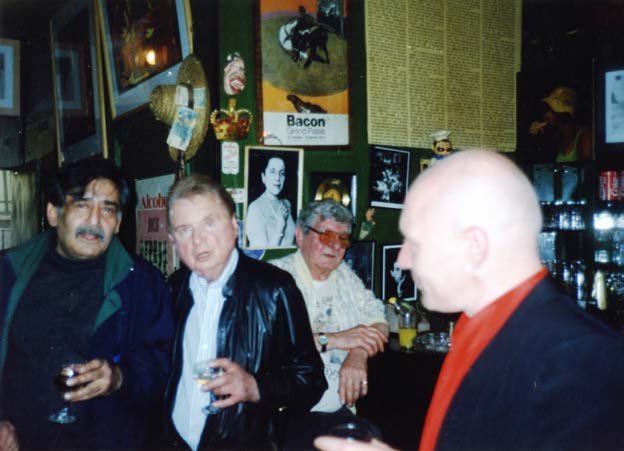
The artist with Francis Bacon at the Colony Club, London · 1991
Courtesy Aref El Rayess Foundation
Period 11 · 1992–2005
Return to Aley
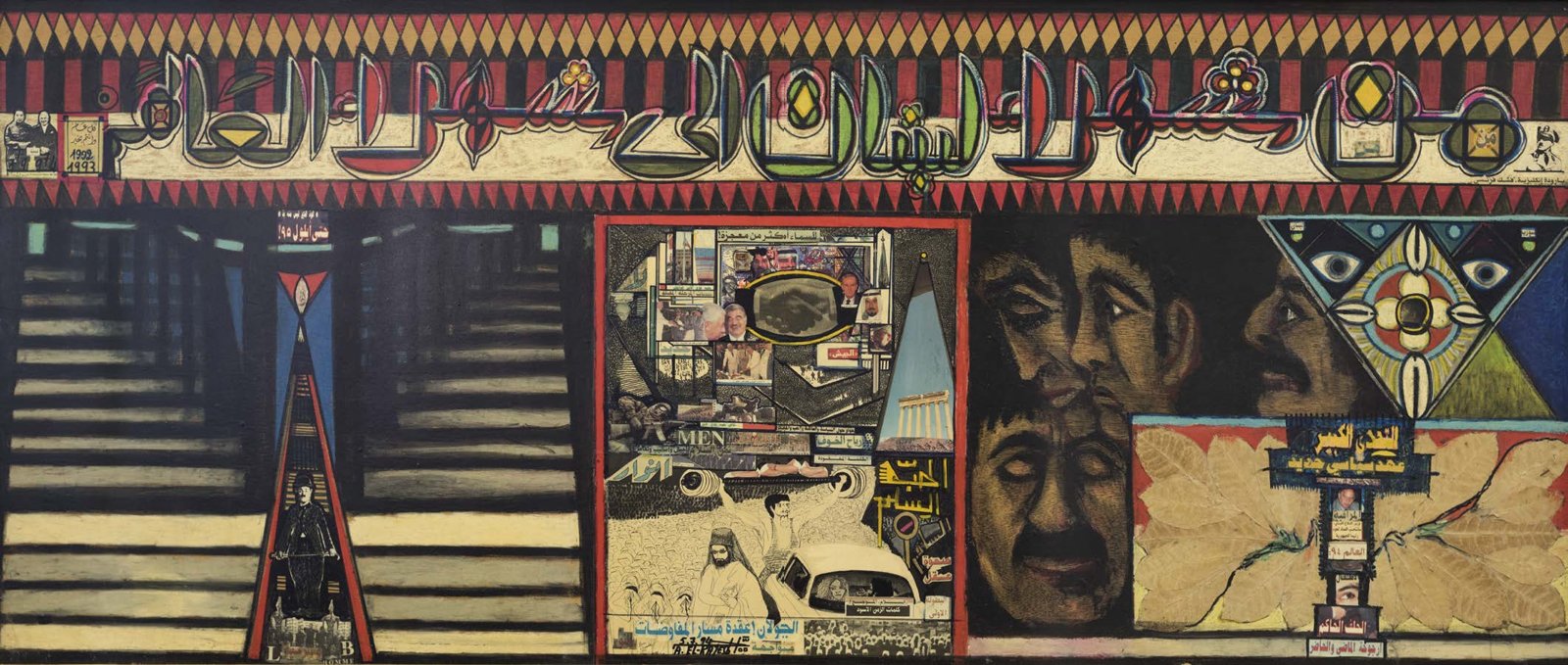
Men shuhada’ lubnan ila shuhada’ el aalam (From the Martyrs of Lebanon to the Martyrs of the World) · 1994 · Paint, graphite, and collage on wood · 90 × 211 cm
Courtesy the estate of the artist and Sfeir-Semler Gallery, Beirut/Hamburg · Photo: Walid Rashid
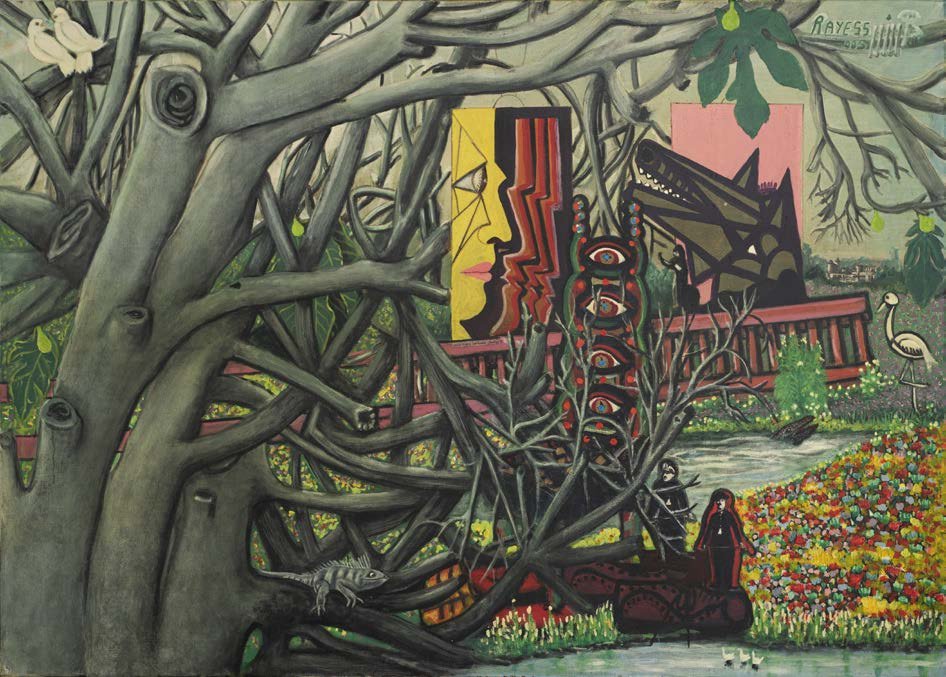
Charlie Chaplin taht al tiné (Under the Fig Tree, Technology and the Environment) · 1995 · Acrylic and mixed media on canvas · 125 × 175 cm
Courtesy the estate of the artist and Sfeir-Semler Gallery, Beirut/Hamburg · Photo: Walid Rashid
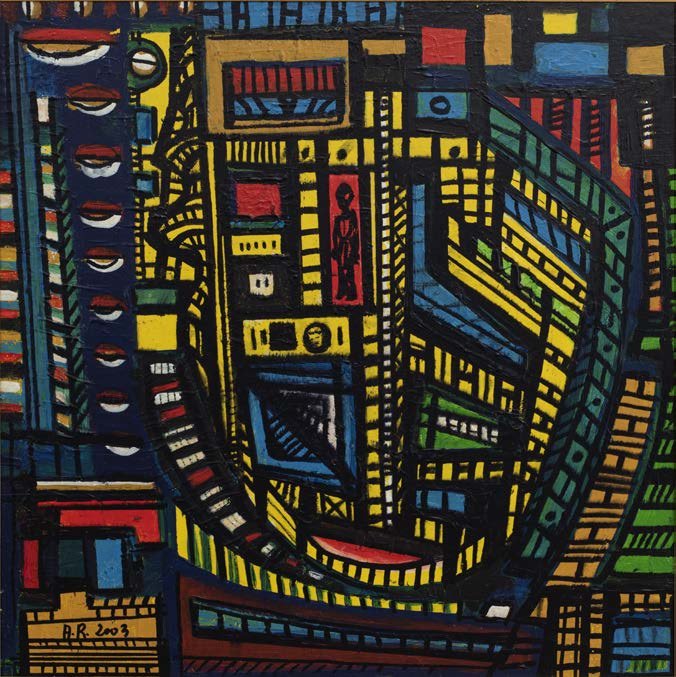
Signes, lignes, couleurs · 2003 · Felt pen, acrylic on wood · 50 × 50 cm
Courtesy the estate of the artist and Sfeir-Semler Gallery, Beirut/Hamburg · Photo: Walid Rashid
December 12, 1992 · Residence and travel
Returns to Lebanon for good
Returned to Lebanon for good.
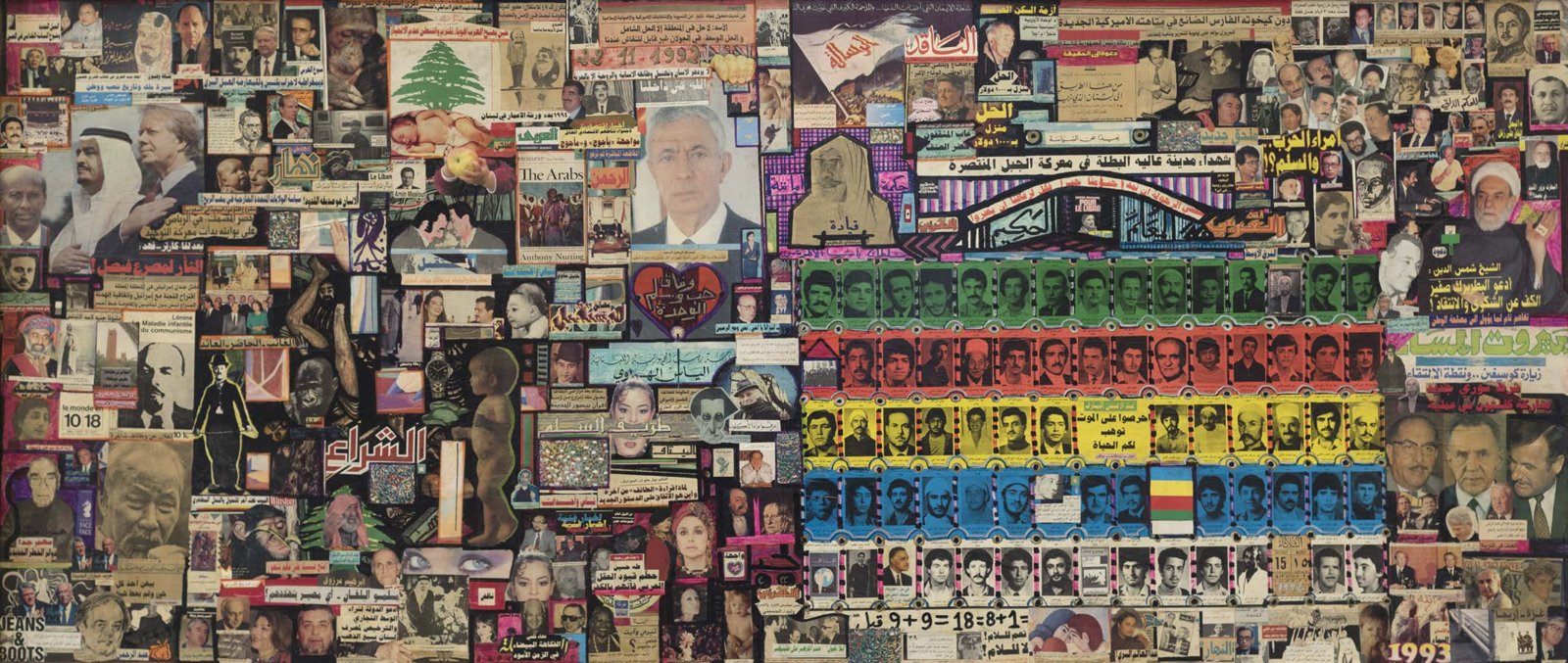
Jidariyat Al-Istiqlal Wal Taef, 22-11-1992 (Mural of Independence and Taef) · 1992 · Collage on wood · 89 × 211 cm
Courtesy the estate of the artist and Sfeir-Semler Gallery, Beirut/Hamburg · Photo: Walid Rashid
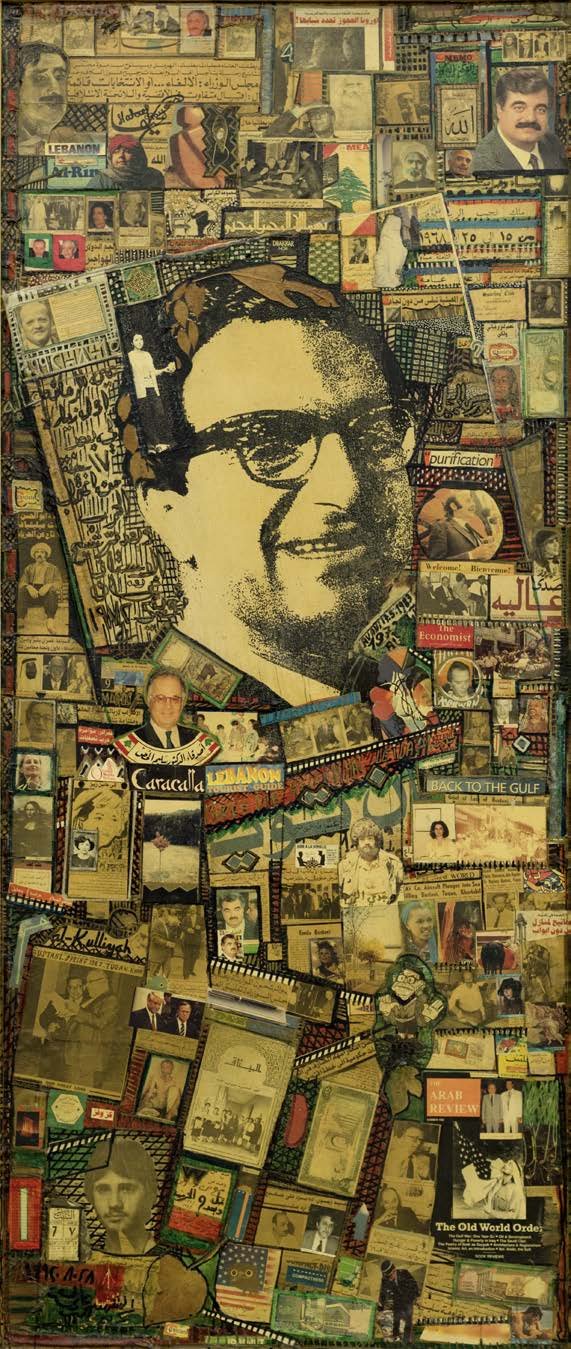
Al Harb—Qabl Wa Ba’d, 28.8.1992 (The War—Before and After, Including Ghassan Tueni) · 1992 · Collage on wood · 211 × 90 cm
Courtesy the estate of the artist and Sfeir-Semler Gallery, Beirut/Hamburg · Photo: Walid Rashid
June 16 – July 16 1993 · Exhibitions
Homage to Janine Rubeiz
Took part in the exhibition celebrating Janine Rubeiz (who died in August 1992) at the eponymous gallery in Beirut, curated by her daughter Nadine Begdache.
12–23 October 1993 · Exhibitions
Œuvres nostalgiques, années 1960, Épreuve d’Artiste
Exhibited Œuvres nostalgiques, années 1960 [Nostalgic Pieces, 1960s] at Épreuve d’Artiste Gallery.
7–22 February 1995 · Exhibitions
Collages d’une réalité imaginaire, French Cultural Centre
Exhibited Collages d’une réalité imaginaire [Collages of an imaginary reality], part of a large series produced between 1992 and 1995, at the French Cultural Centre in Beirut.
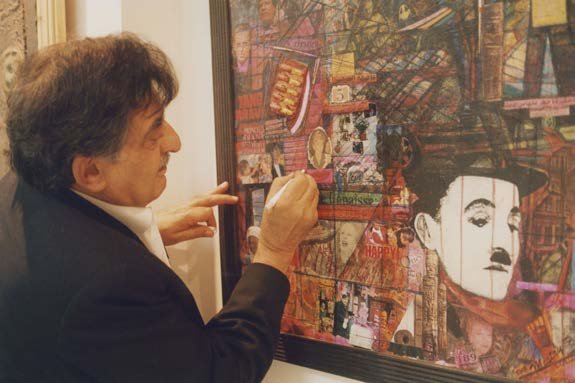
The artist at work on a collage · 1990s
Courtesy Aref El Rayess Foundation
March 29, 1995 · Exhibitions
Abstract Painting in Lebanese Art
Took part in the exhibition Abstract Painting in Lebanese Art, organised at the LAU (Lebanese Arab University).
October 22 – November 5 1997 · Exhibitions
The Human GOD’s Land, World of Art Gallery
Exhibited The Human GOD’s Land at the World of Art Gallery in Beirut, under the patronage of the Minister of Culture and Education Faouzi Hobeich.
December 1997 – January 1998 · Exhibitions
Hommage au Petit Prince, French Cultural Centre
Exhibited at the French Cultural Centre in Beirut the series Hommage au Petit Prince d’Antoine de Saint-Exupéry [Tribute to Antoine de Saint-Exupéry’s Little Prince].
March 25 – April 25 1998 · Exhibitions
Caves de France
Exhibited at the Caves de France.
14–30 May 1998 · Exhibitions
50 ans d’art contemporain arabe pour la Palestine
Took part in the exhibition 50 ans d’art contemporain arabe pour la Palestine [50 Years of Contemporary Arab Art for Palestine], organised by the Agial Art Gallery and curated by Saleh Barakat.
July 14 – August 3 1999 · Institutions and cultural life
First International Sculpture Symposium, Aley
Organised the first International Sculpture Symposium in Aley.
11–21 December 1999 · Exhibitions
Labyrinthes 2000, Palais de l’UNESCO
Exhibited Labyrinthes 2000 [Labyrinths 2000] at the Palais de l’UNESCO in Beirut.
2000 · Institutions and cultural life
Guest of honour, second Sculpture Symposium in Aley
Guest of honour at the second International Sculpture Symposium in Aley.
2001 · Life
Death of his father
The artist’s father died.
June 2001 · Exhibitions
Chants du Carré, Janine Rubeiz Gallery
Exhibited Chants du Carré [Songs from the Square] at Janine Rubeiz Gallery.
August 29 – September 7 2003 · Exhibitions
Exhibition at the Hannouche estate, Bekaa Valley
The collector Emile Hannouche held an exhibition of Rayess works at his estate in the Bekaa Valley (Lebanon).
January 27, 2005 · Life
Dies in Aley
Rayess dies in Aley.
Period 12 · 2005 onwards
Legacy and the foundation
2005 · Institutions and cultural life
Inventory of the studio
After his death, his daughter Hala and a small team spent three months inventorying the works and documents left in the house and studio in Aley.
2012 · Institutions and cultural life
Catherine David visits the studio
A visit to the Aley studio with the curator Catherine David marks a turning point in the care of the estate.
March 4, 2015 · Institutions and cultural life
The Aref El Rayess Foundation is established
The foundation is formally established in Beirut (Ministry of Interior and Municipalities notice no. 423). The works and documents are moved from the studio into the main house in Aley and organised into an archive.
2019 · Institutions and cultural life
Representation by Sfeir-Semler Gallery
Sfeir-Semler Gallery (Hamburg and Beirut) begins representing the estate.
2021 · Exhibitions
Aref el Rayess, 1928–2005, Sfeir-Semler Gallery, Beirut
Exhibition at Sfeir-Semler Gallery, Karantina, Beirut.
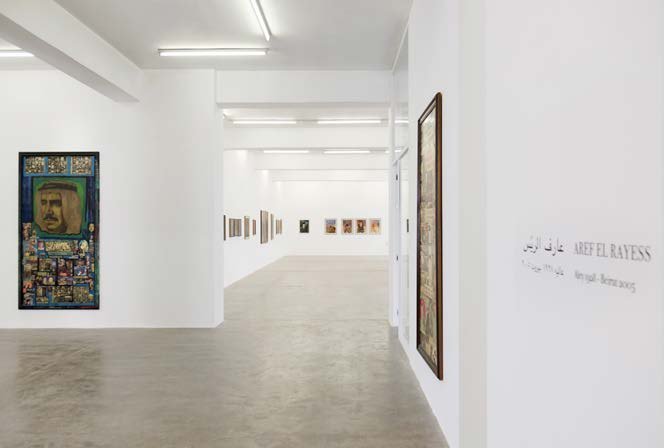
Aref el Rayess, 1928–2005, exhibition view, Sfeir-Semler Gallery, Beirut · 2021
Courtesy the estate of the artist and Sfeir-Semler Gallery, Beirut/Hamburg · Photo: Walid Rashid
2022 · Exhibitions
Solo exhibition, Sharjah Art Foundation
2022 · Exhibitions
Sfeir-Semler Gallery, Hamburg
Exhibition at Sfeir-Semler Gallery, Hamburg.
2023 · Exhibitions
Solo exhibition, IVAM, Valencia
2023–24 · Exhibitions
Sfeir-Semler Gallery, Downtown Beirut
Exhibition at Sfeir-Semler Gallery, Downtown Beirut (2023–24).
2024 · Writing and publications
First monograph
Aref El Rayess: An Artist from Lebanon, 1928–2005, edited by Sfeir-Semler Gallery and published by Hatje Cantz.
2024 · Exhibitions
La Biennale di Venezia: Stranieri Ovunque – Foreigners Everywhere
His work is included in the 60th International Art Exhibition of La Biennale di Venezia, Stranieri Ovunque – Foreigners Everywhere.